Daily Christian Devotion

He will bring every secret thing into judgment.

Ecclesiastes 12:14“For God will bring every deed into judgment, with every secret thing, whether good or evil.”

Naboth was a common man who lived in Jezreel, near the palace of Ahab, the king of Israel. King Ahab desired Naboth’s vineyard so he could turn it into a vegetable garden. He offered Naboth money or even a better vineyard in exchange.

But Naboth humbly refused. It was an inherited property, passed down from his fathers. To him, it was priceless.

Ahab returned home disappointed, sulking because he could not have what he wanted. His wife, Jezebel, learned of this and became furious. In her eyes, the king’s power should guarantee that he received anything he desired.

Jezebel devised a wicked plan. She wrote letters in Ahab’s name, sealed them with his seal, and proclaimed that Naboth had blasphemed against God and the king. She arranged for two scoundrels to falsely testify against him. Innocent Naboth was dragged outside the city and stoned to death. Ahab then seized Naboth’s vineyard.

They thought they could get away with this evil, but nothing escapes the eyes of the Lord. God sent the prophet Elijah to declare judgment: “In the place where dogs licked up Naboth’s blood, dogs will lick up your blood also. As for Jezebel, the dogs will devour her within the walls of Jezreel.” The Lord also decreed that Ahab’s descendants would be cut off—those who died in the city would be eaten by dogs, and those in the countryside would be eaten by birds.

Hearing this, Ahab humbled himself and repented before God. In His mercy, the Lord delayed the disaster—not in Ahab’s lifetime, but in his son’s days.

The prophecy was fulfilled. Ahab was killed in battle, and his chariot was washed in the pool of Samaria where dogs licked up his blood. Jezebel, as foretold, was thrown out of a window by her own servants, and her body was devoured by dogs. Eventually, the entire household of Ahab was annihilated—his line cut off completely—because he had sold himself to evil and allowed ungodly influence to rule his life. Jezebel was left with no descendants, her legacy ended in disgrace.

This stands as one of the most severe judgments in the Bible. It reveals God’s justice for the innocent and His vengeance for the oppressed. Be encouraged: God speaks for the voiceless and avenges the blood of the innocent.

At the same time, this story warns us of the destructive power of ungodly influence. Ahab, though king of Israel, married Jezebel, a pagan woman who corrupted the land. Through her influence came idolatry, the murder of prophets, unjust decrees, and wicked schemes.

We must be careful how we influence others.Nothing we do in secret is hidden from the Lord. Every ungodly plan, every corrupt influence, every injustice—it is all laid bare before Him. We serve a just God, who judges not only those who harm us but also us if we partake in ungodly practices.

Had Ahab been influenced by a godly wife and godly counsel, his story—and his lineage—would have been far different.

This is why the Holy Spirit is our best instructor, and the Word of God our guiding light. The Bible calls us to be the salt of the earth and a light to the world.

Let us remember: “You will be judged in the same way you judge others.” (Matthew 7:2)

Prayer

Heavenly Father, thank You that You see the cries of the innocent and avenge the blood of the oppressed. Help me to walk in integrity and truth, guarding my heart from ungodly influence. Keep me faithful to Your Word, and may I trust that You are the righteous Judge over every hidden thing. In Jesus’ name, Amen.

Standard
Daily Christian Devotion

Recover Everything That Belongs To You

David recovered all that the Amalekites had taken 1 Samuel 30:18

David, already rejected by the army he had been working with, came down to a place called Ziklag. and is means pressed down. This place was burned down and captured by the Amalekites. They not only took his possessions, but also his wives and children.

When David and the others with him saw the land in ruins and their families taken captive, they lifted up their voices and wept until they had no more strength to cry.

David was deeply distressed because the people around him were planning to stone him. Rejected and grieving, he had no one to comfort him. Therefore, he decided to comfort himself in the Lord.

David asked for the priestly garment and went before the Lord. He inquired of the Lord whether he should pursue the enemies, and God gave him approval. On the way, David found a messenger who led him to the place where his family was kept captive.

They fought the battle all day long, and the Bible says David recovered all that was taken from him—nothing was missing.

Although David later became a great king, he was not spared from betrayal, disappointment, and loss. Yet he set an example of how to handle seasons of despair and discouragement.

We also go through many “Ziklag” moments in our lives—situations that bring us down, cause us to lose hope, and leave us discouraged. But the Word of God reminds us, just as David did, to inquire of the Lord when we feel crushed.

When David looked around, there was no one to comfort him. Abandonment and blame from others only deepen the pain, but David turned to the only One who could truly help—the Author and Finisher of his faith.

Many times, we feel like giving up because the burden is too heavy. But even if you are the only one left to go before the Lord regarding your situation—your family, your job, or your health—the Word encourages you to do so.

Instead of staying pressed down, take time to encourage and comfort yourself in the Lord. If you don’t, no one else will, and you may even be surrounded by people who place blame on you for every misfortune.

As you go before the Lord, He will give you grace to handle your situation and He will fight for you. When you engage God in your battles, He becomes your victory.

You will not only be victorious—you will also recover everything you have lost: your joy, your blessings, your family and your peace.

Being pressed down and surrounded by unkind people is painful, but do not let despair rob you of what belongs to you. The battle belongs to the Lord, and He will be your shield and your strong rampart.

Prayer

Lord, when I feel pressed down, rejected, and overwhelmed, help me to turn to You for strength. Remind me that the battle belongs to You and that in You I can recover all that has been lost. Be my comfort, my shield, and my victory. In Jesus’ name, Amen.

Standard
Daily Christian Devotion

You are worth the price

“And the very hairs on your head are all numbered. So don’t be afraid; you are more valuable to God than a whole flock of sparrows.”

Matthew 10:29–31 NLT

Sparrows were sold very cheaply in those days—one of the least expensive animals compared with bulls and rams. Their lifespan is only two to three years, yet they also play a role in the ecosystem. People often considered this bird of little value, but God does not forget even a single one of them. If He cares for the sparrows, how much more does He care for you? The Bible says you are worth many sparrows put together.

An inherited age-old house from your grandparents may not hold much monetary value to others, but to you it might be a priceless place of memories—worth fighting to preserve. Its financial value may be small, yet its true worth is unshakable because of who built it and the love that was poured into it. Value can rise or fall depending on who is looking, but worth remains the same, anchored in meaning and love.

Jesus is worthy of all—not because of human opinion, but because of His identity as the Son of God. And the astonishing truth is that you are worthy of all to Him. You carry the ultimate price tag: Jesus gave His life to ransom your soul.

Many of us struggle with identity and wonder if our lives have value. You may be valuable to a few people, but for many, value is measured by their own needs, the season they are in, or even by the clothes you wear. Value is not static; it changes.

In some homes, even parents can show favoritism between children, valuing them based on education or financial status. Some spouses value each other according to how much is brought to the table. Children may value parents only when needs are met. Friends may betray you for someone they see as “more valuable.”

These experiences can weigh you down and make you feel unseen, and over time you may start to believe that you are not talented enough, not loving enough, that your hard work is never enough—that you are never good enough to talk, walk, laugh, or live freely. These false labels that others create can make you forget who you were created to be and your purpose.

The Word of God encourages you today: King Jesus values you more than His own life, and God sees you as worthy to be saved. The homeless, the orphan, the abandoned, the poor, and the rich—all are worthy of God’s love. Do not forget that your very hairs are numbered; you are the apple of God’s eye. You are a royal treasure in the hands of the Almighty, and truly your Father’s delight, Above all He cares for you. In spite of your short time on this earth, you have a part and a purpose in the kingdom’s ecosystem.

If anyone treats you otherwise, it is time to rise up from the ashes. Shrug off your old feelings of unworthiness. Clothe yourself with strength and embrace the truth: you are so valued that you are seated with Jesus Christ in heavenly places (Ephesians 2:6). Know your value, and know you are worth the price paid by heaven.

Prayer:

Heavenly Father, thank You for reminding me that my worth is not defined by people, circumstances, or seasons of life, but by Your love for me. Thank You for paying the highest price for my salvation through Jesus Christ. May I live each day with the confidence of being Your beloved child, created with worth, purpose, and destiny. In Jesus’ Name, Amen.

Standard
Daily Christian Devotion

No Good Thing Will Be Withheld

“For the Lord God is a sun and shield; the Lord bestows favor and honor. No good thing does he withhold from those who walk uprightly.”

Psalm 84:11 ESV

Cornelius was a man from Caesarea, serving as part of the Roman regime. The Bible describes him as a God-fearing and generous man, along with his household. Though he seemed open to worshiping any god that was introduced to him, the title God-fearing points to his belief in a supreme power above everything.

The Roman army was always hated and feared by the Jewish people. Yet Cornelius stood out as a man who was kind, helpful, and good to both his own people and the Jewish community. He was one of the most respected Roman soldiers among those who were otherwise seen as oppressors.

In Acts 10, we read that Cornelius had a devoted time of prayer, and one day an angel appeared to him in a vision, calling him by name: “Cornelius.”

“And he stared at him in terror and said, ‘What is it, Lord?’ And he said to him, ‘Your prayers and your alms have ascended as a memorial before God.’”

Acts 10:4 ESV

The angel gave Cornelius instructions to send for Peter. When Peter arrived, he shared the message of salvation with Cornelius and his household. Their search for the true God ended that day. The message of the cross and the love of Christ led them all to give their lives to Jesus, and they were baptized in the name of the Father, the Son, and the Holy Spirit.

The great message revealed through Cornelius is that God does not show favoritism. When your ways are upright, God finds His way into your life.

Many people today have a deep search for God. They know there is a supreme power above them. Their hearts naturally desire to do good, help others, and live uprightly. Yet, even while searching, they never cease to do good for those around them.

God honors such hearts. The Bible says that He does not withhold any good thing from those who walk uprightly. The greatest gift of all—salvation through Jesus Christ—was given to Cornelius and his household because of his sincere search for God and his generous heart.

Having Jesus Christ as your portion is the greatest gift heaven can release to you. Cornelius did not resist the message Peter preached. His heart immediately recognized that the emptiness inside could only be filled by Jesus. While Peter was still speaking, the Holy Spirit fell on all who were gathered—whether they had believed in Christ before or not.

The same God who sent an angel to guide Cornelius toward salvation will also meet you and your household. You may know someone—or perhaps you are the one—who walks uprightly and is God-fearing. Take courage: God will find His place in a heart that is humble and honorable.

Without God’s hand, no one can truly do good. Being good and doing good reflect the nature of God, but your life only finds true meaning when you allow Jesus into your heart. Christ completes your life and satisfies the longing inside.

To all who walk uprightly, the Word of God promises: “No good thing will He withhold.” You will receive every good portion from heaven, with Jesus Christ as the greatest treasure.

Keep praying. God will find His way into the hearts of upright people, and salvation will come to their household.

Prayer

Heavenly Father, thank You for showing us through Cornelius that You do not show favoritism but look at the heart. Teach us to walk uprightly, to live generously, and to keep our hearts open to You. May our prayers and good works rise before You as a memorial. Bless our households with salvation, and let Your Spirit fall afresh on us. In Jesus’ name, Amen.

Standard
Daily Christian Devotion

Learn To Hear The shepherd’s Voice

“My sheep listen to my voice; I know them, and they follow me.”

John 10:27 (NLT)

There was once an experiment to test whether sheep truly recognize and follow only their own shepherd’s voice. Three different shepherds were placed with three different flocks. Each shepherd was asked to call out to sheep that did not belong to him. No matter how skilled or trained the shepherds were, none of the sheep responded, because the voice was not their shepherd’s.

But when the rightful shepherd of each flock called out, something remarkable happened. The sheep immediately recognized the familiar sound and came running to him. They knew his voice, trusted him, and followed him because they had built that bond through daily care. Their shepherd was the one who fed them, gave them water, protected them from predators, and tended to them when they were sick.

This shows us a beautiful truth: sheep build trust with their shepherd because of relationship and consistency. A hired hand may abandon the sheep when danger comes, but the good shepherd stays and lays down his life for them. Jesus calls Himself the Good Shepherd. He laid down His very life so that we might be saved from sin and death.

The Bible says His sheep hear His voice. Jesus invites us into fellowship with Him so that we may learn to recognize His voice and stay attentive to who is truly calling us. If sheep could follow the voice of anyone, they would be easily stolen. And even killed. In the same way, if we listen to voices other than Christ’s, we can be deceived or led astray.

God designed us as spiritual beings with the ability to hear His voice—far greater than sheep recognizing their shepherd. But to tune our ears to Him, we must cultivate a relationship with Jesus. He is the Good Shepherd who leads us to green pastures, who leaves the ninety-nine to find the one lost sheep, and who protects us with His rod and staff. With Him, we are safe, shielded, and provided for.

We must be aware of those who pretend to come as our shepherd. The voice of Jesus is unique, and it is heard clearly through the Word of God. Unlike other voices, His voice does not condemn. His voice does not abandon. His voice does not bring fear. Instead, it brings comfort, healing, peace, provision, and protection.

When we follow His voice, Jesus assures us that no one can snatch us from His hand:

“…no one can snatch them away from me.”

John 10:28 (NLT)

Is anyone or anything powerful enough to snatch us from His strong and able hands?

Choose the Shepherd.

Choose the Good Shepherd, Jesus.

If you do, you shall never be in want again.

Prayer:

Lord Jesus, my Good Shepherd, teach me to hear and follow only Your voice. Keep me safe in Your care, protect me from deception, and lead me daily into Your peace, provision, and love. Amen.

Standard
Daily Christian Devotion

A Room For Peace And Prosperity

“I will establish the oath that I swore to Abraham your father. I will multiply your offspring as the stars of heaven and will give to your offspring all these lands. And in your offspring all the nations of the earth shall be blessed.”Genesis 26:3–4 ESV

Isaac, the firstborn of Abraham and Sarah, lived during a time of famine. God instructed him to stay in Gerar in Palestine as a foreigner. God promised to bless him, just as He had promised Abraham.

Isaac planted seeds during the famine, and he harvested a hundredfold because of the favor of God. He not only became rich but also exceedingly prosperous in livestock, herds, and servants. His blessings continued to grow.

The blessing upon him made no sense to others. He planted during famine—a dry time, with no water, no favorable condition to grow crops. To others, it looked like a waste of time and resources. Yet his livestock multiplied, his crops flourished, and his wealth grew. The Bible does not say God sent rain—his only resource was God’s promise and His faithfulness.

But as we know, when others see us blessed, jealousy often rises. The Philistines around Isaac became very jealous and asked him to leave. They even filled the wells that Abraham’s servants had dug. Isaac’s blessing made them fearful.

Yet Isaac did not contend with them. He moved away and restored the wells his father had dug, renaming them. On top of that, he discovered a fresh well. But the local herdsmen quarreled with Isaac’s men and claimed it. So Isaac’s men named the place Esek, which means argument or contention.

Isaac did not fight back. He moved on and dug another well. Again, the locals claimed it, and that place was named Sitnah, meaning enmity. Still, Isaac’s men did not argue. They moved on and dug yet another well—and this time no one contended for it. Isaac named it Rehoboth, meaning room, for the Lord had made space for them to flourish.

As the Bible says,

“When a man’s ways please the Lord, he makes even his enemies to be at peace with him.”Proverbs 16:7 ESV

Then King Abimelech came to Isaac in peace, admitting that he could see the favor and blessing of the Lord upon him. He acknowledged that God was with Isaac, and together they made a peace treaty. That very day, Isaac’s men found water, and the well was named Shibah—the well of oath. The city has been called Beersheba to this day.

The Word of God encourages us today that even in days of famine and uncertainty, God’s unfailing promise and favor will remain with us. When people around us see the hand of God in our lives, jealousy will rise. They may compare their lives with ours, and jealousy can grow into contention and enmity. They may even claim what belongs to you—your friends, family, possessions, positions, and property.

Like Isaac carried God’s promise and kept moving forward, we too must press on. Like Isaac restored and renamed the wells of his father, we should also dig and restore the wells of gifts and talents that were once covered and hidden—re-creating our lives for His glory.

Instead of pouring our energy into arguments and enmity, let us use our time wisely to rebuild our lives and bless those around us. In God’s time, He will open for us a Rehoboth—a well of blessing—where we will flourish in the land of the living. Your Rehoboth will even attract your enemies to make peace with you. The favor of God will cause others to testify, “Surely, God is with you.”

Isaac began his journey in Gerar (the lodging place). Through jealousy (Esek) and enmity (Sitnah), he was pushed to discover Rehoboth (room), and finally, he arrived at Beersheba—close to the promised land.

Every challenge, every argument, every contention that rises against the blessing of God in our lives will only serve to push us closer to the fulfillment of His promises. May we receive our portion as we move forward in God’s favor, carrying His promise and walking in His call.

“Don’t settle in the place of contention—keep digging until you reach your Rehoboth.”

Prayer

Heavenly Father,

Thank You for Your unfailing promises that sustain us even in times of famine and uncertainty. Help us to build, restore, and walk in peace as we carry Your promise.

In Jesus’ name, Amen.

Standard
Daily Christian Devotion

The Lord Will Fight For Your Beracah

“But you will not even need to fight. Take your positions; then stand still and watch the Lord’s victory. He is with you, O people of Judah and Jerusalem. Do not be afraid or discouraged. Go out against them tomorrow, for the Lord is with you!”

— 2 Chronicles 20:17 NLT

King Jehoshaphat, the fourth king of Judah, walked upright before the eyes of the Lord. He loved the Lord and followed His commandments and also brought reformation in the land of Judah that placed God under his leadership. There was peace and justice in the land of Judah.

The military power was very strong, and he had many soldiers to fight, and he stationed them around the country of Judah. God was with him and the people of Judah, and this brought fear around the neighboring kingdoms. The enemies of Judah formed their alliance to bring down and capture the land. When the messenger informed Jehoshaphat about their plan, he was afraid.

A very successful king, with strong military force and positions effectively guarding his nation, was afraid of the message about enemies approaching. When fear crept in, the first thing the king did was send out an invitation for fasting to seek the face of the Lord. When the invitation was sent, people all over the cities of Judah came along with their wives and children, fasting and praying.

King Jehoshaphat, a leader who was adored and looked upon as a mighty man, stood humbly before God in front of the assembly for help. He prayed that when disasters, sword, judgment, pestilence, or famine came upon the land, the house of Judah would stand in the house of the Lord and cry in their affliction, for they knew that He would hear and save.

He revisited what God did for the ancestors and boldly declared that He would do it again for them. The strongest military people with the king admitted that they were powerless before these alliances, and that only God alone could give victory.

God sent a word after these people humbled themselves before Him. He said not to be afraid of this great alliance and told them they would not need to fight the battle: stand firm, hold your position, and see the salvation of the Lord.

God did not ask the army to go back to their houses just because He assured that the battle belonged to the Lord. Rather, He commanded the army to go out to the battlefield and they would see the hand of God.

When the word came, Jehoshaphat was encouraged. He bowed his head, and all the people bowed and worshiped, followed by a loud voice of praise. When the day of battle came, the soldiers of Judah arose early in the morning, and the worshippers went before the army in holy attire, thanking and praising God for His steadfast love.

The three alliances—the Moabites, Ammonites, and Mount Seir—invaded Judah by climbing up 3,400 feet from the Dead Sea to the wilderness of Tekoa. The Bible says that when Judah began to sing and praise, God set an ambush against these people, and they killed each other.

Meanwhile, the people of Judah were marching towards the wilderness of Tekoa. When they arrived, they saw only corpses and dead bodies in great number. The battle was already defeated because God was involved.

The story ends like this: they came for a battle, but they carried back blessings—good clothing and precious things. They even left some behind because they had more than enough to carry home. The army of God came back with shouts of joy, noise of victory, with happiness and instruments. The place is even now called the Valley of Beraca, which means the Valley of Blessing. The surrounding kingdoms were even more fearful of the land of Judah.

The Word of God brings encouragement today that the battle belongs to God. Like Jehoshaphat, what are we afraid of? We might be mighty people with power and possessions, but when messages like this come with fear, we lose our ground and yield to fear.

Our first defeat is when we yield to fear. When fear finds a place in our lives, there is no way we can think of overcoming the situation. Our minds are already defeated before even facing the actual battle. We only find solutions to handle the defeat and cope with failure. Success will not even cross our minds, and planning for victory will not even be part of our strategy.

But King Jehoshaphat understood that this fear was mightier than the actual army coming after him. He didn’t even have to be worried because he had a strong military force and positions around his country, and yet the enemy’s message shook the ground with fear.

One person bringing one negative word is enough to break us. King Jehoshaphat was no exception from fear. Instead of yielding to it, he dealt with it, not alone, but with a company of people.

We need more than one person to defeat this fear. It emphasizes the importance of being with people of faith to acknowledge and agree with the promises of God. The story tells us the importance of seeking God’s face in the time of crisis, irrespective of how powerful, mighty, and intelligent we are.

Like Jehoshaphat, let us go low before God and surrender to Him, acknowledging that we are powerless to handle situations alone, and that He is a faithful God—yesterday, today, and forever. When we put our confidence in God, we will deal with the situation like yet another battle, and of course, yet another victory.

Let us face our battle with praise and worship. We might walk towards the wilderness, but that is where our victory is. With our own eyes we will see the problem already dealt with, the situations already handled, and the enemy already defeated.

We might have walked in looking for a battle, but God will change our situation so that we will only carry His blessings back. Only God can make shouts of praise roar in the battleground.

May our valley of wilderness become our Valley of Beracah (blessing).

Prayer

Heavenly Father,Thank You for reminding us that the battle is not ours but Yours. We surrender our fears to You and trust that You will fight for us.

In Jesus’ name, Amen.

Standard
Daily Christian Devotion

God Will Rewrite Your Story

“Yet what we suffer now is nothing compared to the glory he will reveal to us later.” Romans 8:18 NLT

I would like to share an inspiring real-life story that even came as a movie to encourage people to believe and to hope.

A young couple in a small village in India was losing their babies on the third day after delivery. She lost three or five babies that way. Later she was admitted in a Christian hospital to deliver her sixth child. A baby boy was born on March 19, 1947.

The baby was struggling to survive, and on the third day she went to the bishop in the chapel and poured out her grief and anguish. The bishop prayed, named him Yesanna, and prophesied that he would become a great man of God.

When the boy was 10 years old, he was tormented by demonic spirits and wandered the streets without a right mind. He was terminated from school because of his unstable mind. He wandered around, roaming as a mad man, vomiting blood, sleeping on footpaths and railway platforms, living a miserable life. At times, he even ate from the garbage.

On February 15, 1964, this young boy was wandering the streets as usual and was led to a Christian cottage meeting happening outside a house. The worship songs and praises caught his attention, and he went and sat inside.

After the meeting was over, around 11 p.m., a bright light shone on him. As he turned, he saw the face of the Lord Jesus Christ in dazzling light, and he was healed immediately. That same night, after seven years, he went back to his home with a sound mind.

The next day he visited the man of God he had met the previous night. The pastor explained how Jesus healed him, referred him to the Bible, and handed him one. From that time, the young man gave his life to Jesus, began reading the Bible continually, fasting and praying regularly.

At the age of 19, he dedicated his life to ministry, and God started to use him mightily. For over 40 years of ministry, God worked through him. He went to be with the Lord at the age of 67.

This brother, Yesanna, is the founder of Hosanna Ministries, which transformed many lives. Without television or social media, he would gather more than two million people every year and feed them as well. He transformed the state of Andhra Pradesh in South India by his powerful testimony, miraculous healings, and many witnesses during his ministry. I hope his ministry continues to carry his legacy.

This minister of God is an example to encourage us that God is still in the life transformation business today.

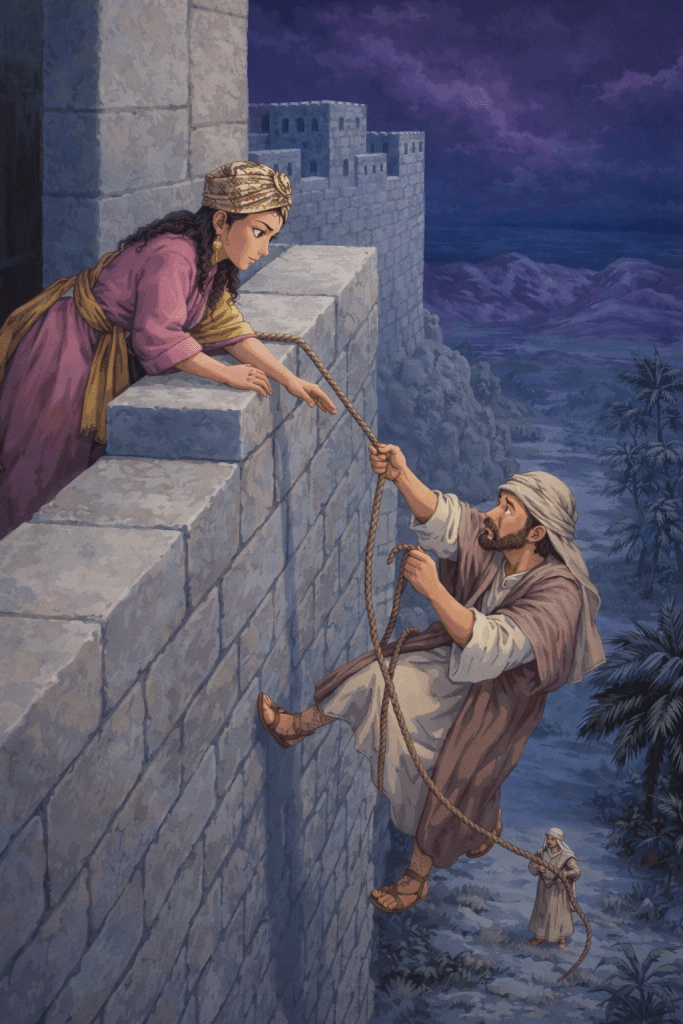
In the Bible, it talks about a woman named Rahab who lived in the city of Jericho. She was a prostitute, placed on the social margins of society. Despite being a Canaanite woman in her own land, Rahab demonstrated strong faith and extraordinary courage. She saved the spies from Israel, hid them from the soldiers who came to kill them, and helped them escape from the city.

Before they left, she begged them to show mercy to her father, mother, brothers, and sisters and spare their lives when Joshua’s army came back to take over the city. The spies kept their promise, and when Jericho was destroyed, Rahab and her family alone were spared.

This woman was not only spared from death, but she also received redemption. A name people would be ashamed to call was written into the genealogy of the Messiah, Jesus Christ (Matthew 1). God could have easily bypassed this “unclean” woman, but His redemption shows us that He does not look at social status, family dignity, or how bad the situation is. He only sees faith.

Redemption found its way into this humble woman’s house because of the love she had for Yahweh. Every time we read about the birth of Jesus, we are reminded of Rahab. After 29 generations, God changed her story from being called a harlot to being remembered in the lineage of the Redeemer.

In the same way, God can rewrite your story. Just as He changed Brother Yesanna from a “mad man” into a minister of God, He is ready to rewrite your story as well.

What is your story? Give it to Jesus as it is. He will rewrite the script, change the direction, and the climax will be a glorious one.

As the Scripture reminds us, your present suffering is nothing compared to the glory you will see soon. Give it to Him—the Author and Finisher of our faith.

Prayer

Thank You, Lord, for the gift of redemption through the blood of Jesus Christ. Today, in faith, I give my story to You. May my story declare Your goodness, and may Your glory be revealed through me. In Jesus’ name, Amen.

More about Brother Yesanna’s ministry:

https://hosannaministries.co

Standard
Christ, Uncategorized

Weight Of The Pain Pebbles

Come to me, all who labor and are heavy laden, and I will give you rest.” – Matthew 11:28 (ESV))

There was once a little bird in a rainforest that collected pebbles. Each pebble represented a burden—a sorrow, a painful memory, or a difficult lesson from the past. The bird believed these “pain pebbles” were valuable treasures, reminders that made it stronger. But as the pouch of pebbles grew heavier, the bird’s flight became more difficult and painful.

An old wise owl observed the bird and asked, “Are you truly living in the present, or just carrying the weight of yesterday?” But the little bird ignored the advice and continued collecting pebbles. Over time, its wings grew weaker and fragile until they finally broke. Unable to fly, the bird began walking with the heavy pouch strapped to its back.

One rainy day, the weight became unbearable. The bird slipped, and the very burden it had been carrying crushed it. By the time help arrived, it was too late. The owl sighed and said, “The past was meant to guide us, not to weigh us down.”

Many of us live like that little bird. We treat our burdens as treasures—carrying them everywhere we go. Even at joyful occasions, such as weddings, dressed in beautiful clothes, we still cling to our dirty pouch of pain pebbles. We struggle to lay them down, because we do not fully trust anyone to care for our burdens. In the end, these weights rob us of our joy, drain our strength, and keep us from dancing freely.

We carry these burdens into our workplaces, schools, homes, social gatherings, and even places of worship—only to carry them back again. But the truth is this: the weight of burdens will eventually crush us physically, emotionally, and spiritually.

The good news is that God offers us a safe place to lay them down—at the feet of Jesus. Here, there is no judgment about the size or nature of your burden. Whether big or small, Jesus handles it with love and care. He not only receives your burden but also gives you peace and a way forward.

Carrying the weight of the past prevents us from enjoying the present and moving into the future. The Bible encourages us to forgive, to let go, to move forward, and to live in peace. Remember—burdens are meant to be laid down, not carried.

Prayer

Dear Heavenly Father,

Thank You for inviting me to lay down my burdens. Thank You for the cross. Today, I come boldly and cast every weight I carry at Your feet, believing You will handle each one with care. In Jesus’ name, I pray. Amen.

Standard
Christ, Uncategorized

An Invite To Taste

“Oh, taste and see that the Lord is good!”

Psalm 34:8 ESV

Out of the great revival, many missionaries came to Northeast India to spread the gospel. The region of Assam was home to many tribes, known to be aggressive and even headhunters. Into this hostile community, a group of missionaries from the American Baptist Mission came to preach the message of love, peace, and hope found in Jesus Christ to the Garo tribe.

In this challenging environment, one man named Nokseng, together with his wife and two children, accepted Jesus as their personal Savior. His faith began to influence others, and many gave their lives to Christ. However, the village chief grew angry. He summoned the family who had first accepted Christ and demanded that the man publicly renounce his faith—or face death.

Moved by the Holy Spirit, the man declared: “I have decided to follow Jesus.” Furious, the chief ordered his two children to be killed with arrows. As their bodies fell to the ground, the chief gave him another chance: “Renounce your faith, or I will kill your wife.” The man replied: “Though no one goes with me, still I will follow.” Enraged, the chief ordered his wife to be killed as well.

Finally, the chief gave one last chance for the man to deny Christ and save his own life. His final words were: “The cross before me, the world behind me—no turning back.” He was then killed like the rest of his family.

But the story did not end there. The chief, who had ordered the killings, was deeply moved by such faith. He wondered why a man, his wife, and children would willingly die for someone who lived in a faraway land centuries ago. Convicted, he realized there must be an extraordinary power behind their faith, and he wanted to experience that love. The chief himself confessed Jesus as Lord and declared his faith publicly.

When the villagers heard their chief, they too accepted Christ as Lord and Savior. The man’s last words became the inspiration for the famous hymn: “I Have Decided to Follow Jesus. No turning back, no turning back.”

In the Bible, we also read about David, a warrior who once fled for his life. To escape death, he even pretended to be insane before his enemies (1 Samuel 21). In that desperate moment, David later wrote: “Taste and see that the Lord is good” (Psalm 34:8). A warrior, running for his life, still testified of God’s goodness and encourages us to do the same.

Both this martyred family and David remind us that even in life-or-death situations, it is the love and peace of God that satisfies the soul. When you truly taste the goodness of God, you will decide to follow Him—and never turn back.

Today, I invite you: Jesus has set a place for you at His table. Come, taste His goodness. I am confident that you too will never turn back.

Prayer

Lord, thank You for Your love, Your goodness, and Your peace. Give me the opportunity to know You more deeply and to taste Your goodness, so that I may never turn back. In Jesus’ name, I pray. Amen.

Standard