Daily Christian Devotion

No Condemnation.No Trap

“Therefore, there is now no condemnation for those who are in Christ Jesus.”

Romans 8:1

Condemnation means feeling deeply guilty, ashamed, or unworthy because of something you’ve done or think you’ve done wrong. It’s like your own heart or mind keeps punishing you—even after you’ve asked for or received forgiveness.

Condemnation is a trap because it keeps you stuck in guilt instead of moving forward with peace, healing, or freedom. It’s different from the healthy conviction that the Holy Spirit brings, which helps you recognize a mistake and change. Condemnation, on the other hand, only makes you feel hopeless and defeated—and that comes from Satan.

The Bible says that all have sinned and fall short of the glory of God (Romans 3:23). That means no one—literally no one—has the right to criticize or condemn another person’s sin.

We feel guilty for so many things, even the smallest ones. When we can’t spend enough time with our parents, we feel guilty. When we fail to meet our spouse’s expectations or break a promise to a friend, guilt weighs on us. Even something as simple as missing the chance to cook our child’s favorite meal can make guilt creep into our hearts.

Sometimes, I even feel guilty when I can’t pray or read the Bible. With that guilt comes fear—the fear that God is disappointed or that I’m not perfect enough. But that fear keeps me from going to the very One who loves me most.

It often starts as a small feeling of guilt but grows until we begin to believe we’re not a good son or daughter, not a perfect spouse, not a good parent, not even a good friend—or sometimes, not even fit to live.

These kinds of guilt feelings can often be overcome when we address and fix smaller problems, but what happens when the issues are much bigger? What about a murder, adultery, ruining someone’s reputation, or committing an act that seems impossible to repair? What about struggles like gambling or addiction that can feel overwhelming and unending?

Even then, the Bible declares: There is no condemnation in Christ. His mercy goes far beyond what any human mind can comprehend. When you repent of your sin, you are set free.

Let’s look at the story of the adulterous woman in the Bible. She was caught in the very act—red-handed. The law demanded death by stoning. There was no way out, no excuse she could make.

The religious leaders brought her before Jesus to see how He would respond. Jesus stooped down and began writing in the dust with His finger. When they kept pressing Him for an answer, He stood up and said, “Let the one who has never sinned throw the first stone.” Then He stooped down again and continued writing.

One by one, her accusers slipped away—from the oldest to the youngest—until only Jesus and the woman remained.

Jesus stood and asked her, “Where are your accusers? Has no one condemned you?”

She replied, “No one, Lord.”

And Jesus said, “Neither do I condemn you. Go and sin no more.” (John 8:1–11)

The only One who had the right to condemn her—Jesus Himself—chose not to. What a great relief that must have been for her, and what a great hope it is for us!

Jesus’ expectation was simple: “Do not sin anymore.” His message was not condemnation but restoration. The best way to show our gratitude for His forgiveness is to walk in freedom and live righteously.

Everyone looks righteous until their sin is exposed. People might try to keep you captive by your past, criticize your every move, or judge your journey—but that’s the trap of the enemy.

Do yourself a favor: believe that the blood of Jesus has set you free from every sin and every trace of condemnation. Your past may be amplified by the accuser, but remind him that a King died for you—and nothing can separate you from His love.

Sometimes you might need help to climb out of the pit, but freedom from condemnation begins simply by believing:

“If the Son sets you free, you will be free indeed.” (John 8:36)

You’ll remain in sorrow if you refuse to believe and accept the free gift of salvation that Jesus offers. The accuser wants you to stay bound—but show him what your sovereign God can do. He breaks every chain of condemnation.

Be free, and sin no more.

Prayer

Thank You for Your mercy that covers all my sins.Thank You for not condemning me but calling me to walk in freedom.When the enemy reminds me of my failures, remind me of Your cross and Your precious blood that set me free.I receive Your freedom today and choose to walk in Your truth.

In Jesus’ name,

Amen.

Standard
Daily Christian Devotion

He Shall Make You Great

May God make you like Ephraim and Manasseh. In this way Israel made Ephraim greater than Manasseh.

Genesis 48:20

Joseph brought his two sons—the firstborn Manasseh and the younger son Ephraim—to his ill father Jacob, who was also known as Israel.

Jacob was very old, and though his eyes were dim, when he saw Joseph and his two sons, he found new strength and sat up in bed. Jacob had not seen Joseph for many years, nor had he witnessed the birth of Joseph’s sons, who were born in Egypt. His heart was overjoyed to see Joseph’s family. Out of that joy, Jacob took Ephraim and Manasseh as his own sons. In other words, these grandsons were adopted into Jacob’s family as if they were his own children.

These two sons were counted among the twelve tribes of Israel. Jacob proudly declared, “They are mine,” while reminding Joseph that any other children born to him would belong to Joseph alone. Then Jacob invited Joseph to bring his sons forward so that he could bless them before his death.

Joseph bowed before his father and carefully positioned his sons. He took Ephraim in his right hand and placed him toward Jacob’s left hand, and he took Manasseh in his left hand and placed him before Jacob’s right hand. Joseph arranged them this way so that Jacob’s right hand—the hand of greater blessing—would naturally rest upon the firstborn, Manasseh.

But Jacob had a different plan. He crossed his hands, placing his right hand on Ephraim, the younger, and his left on Manasseh. He then pronounced his blessing on Ephraim recorded in Genesis 48:15. Joseph was troubled by this sight and tried to correct his father, urging him to bless the firstborn properly. But Jacob refused and replied that he knew exactly what he was doing. However he blessed Manasseh also, but gave Ephraim the greater blessing, declaring that the younger brother would surpass the older.

Joseph the earthly father himself was not pleased to see his younger son receive the blessing of the firstborn, but it delighted the heavenly Father to make the younger greater than the older.

Yahweh highly favored Ephraim and crossed over the order of the firstborn to make him great. And in later days, even when Ephraim’s descendants were unfaithful, God’s love crossed over in mercy, crying out in Hosea 11:8, “How can I give you up, O Ephraim?”

This story shows us how God’s grace goes beyond what we deserve. “He has mercy on whomever He wills.” (Romans 9:18)

The Word of God reminds us that His grace is not limited. He can lift you from the pit and place you on the mountaintop. He can choose the smallest clan and make it into a great nation.

The eyes that once saw you as the least—God will cross over to make you great. The blessing on your life is not by luck or chance, but by the intentional hand of God. He is fully aware of the work He is doing in your life. You are on God’s mind, and His blueprint carries both you and your family.

The Lord’s hand will cross over every obstacle, every hindrance, to bless the least, the oppressed, the ignored, and the rejected.

Like Joseph, even if others try to push you aside or deny you your blessing, the Lord’s right hand will rest on you.

Ephraim received grace when his earthly father’s hands were crossed. And through the cross of Jesus Christ, our heavenly Father has given us even greater grace.

Receive King Jesus into your heart, and you too will receive grace and abundance for your life.

Prayer

Lord, I thank You that Your hand crosses over to bless me, even when others try to set me aside. Thank You that Your favor is intentional, and Your grace is greater than my qualifications, my past, or my place in life. Place Your right hand upon me and my family, and let Your blessing flow through every area of our lives. In Jesus’ name, Amen.

Standard
Uncategorized

Embrace the chase to see the Glory

“…and he will chase after you. I have planned this in order to display my glory through Pharaoh and his whole army. After this the Egyptians will know that I am the Lord!” Exodus 14:4 NLT

One man was trying to transport a great white shark from one place to another. He placed a few fighter fish in with it to chase the shark. The person assisting him wondered why he would intentionally hurt the shark, knowing that the fighter fish could injure or even kill it. The man explained that certain fish species must be kept active to breathe properly, especially those that rely on constant movement for water to pass over their gills. This act was done to support the shark’s survival until it reached the great ocean. Though it was being chased, it was for the purpose of survival and thriving.

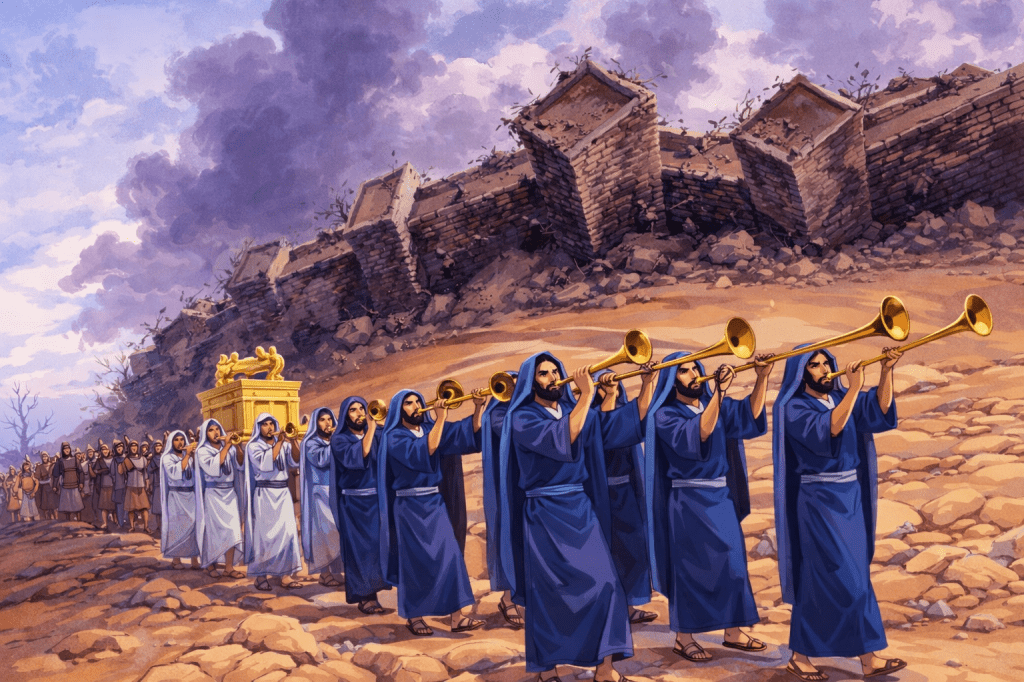
This passage reminds us of a similar act when God instructed Moses to let the Israelites camp in a place that appeared to trap them—with the sea in front and Pharaoh’s army behind—so that the historic chase would eventually display the glory of God and show that He is the great I AM.

To the Egyptians, it looked as if the Israelites were an easy target, and so they began to chase. As the Israelites saw the great army approaching, the first thing that came out of their mouths was murmuring about their situation. They quickly forgot that this was the same God who had sent plagues upon their enemies just days earlier to set them free.

When Moses brought the plea before God, His response was simple and sounded like: “You know what to do when someone chases—just get moving” (Exodus 14:15). That act of moving with God’s instructions gave the people of God the greatest milestone in history—the Red Sea parted, the people crossed over, and their enemies drowned. What looked like a trap became a glorious escape, revealing the glory of God.

The Word of God encourages us today that He is fully aware of the chase and who is chasing you. He knows the trap, and He sees the sea before you.

This “fighter fish” kind of situation is allowed in your life to keep you moving, progressing, and growing stronger—so that the great glory of God may be revealed as He leads you into your promised land.

The enemy will not triumph over you, and the sea will not overcome you. He is the God who makes a way when there seems to be no way.

So take heart. Stop murmuring, and remember how God has displayed His power to set you free in the past. Thank Him for His mercies. Embrace the chase, because the Egyptians you see today—you will never see again (Exodus 14:13 NLT). Your promised land is waiting for you.

Prayer

Dear Heavenly Father, thank You for setting me free from the hand of the enemy. Help me not to murmur but to thank and praise You in all circumstances. In Jesus’ name, I ask. Amen.

Standard
Christ, Hope, Uncategorized

Move Forward With Your Identity

“You come against me with sword and spear and javelin, but I come against you in the name of the Lord Almighty, the God of the armies of Israel, whom you have defied.” 1 Samuel 17:45

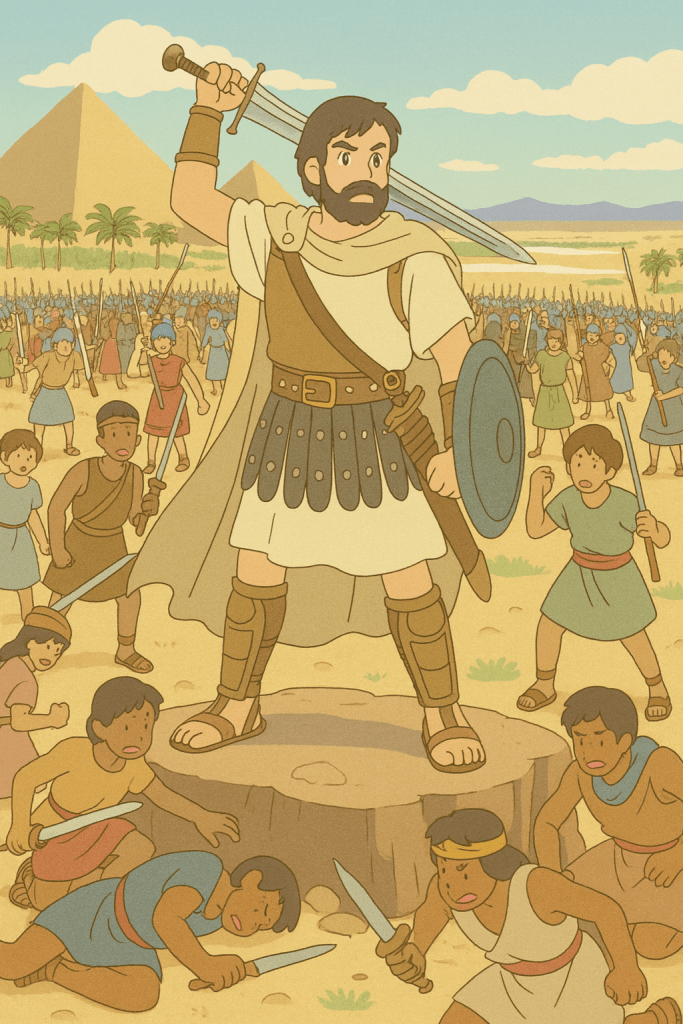
David was a shepherd boy who usually brought food to his brothers in the army every day. One day, he happened to see Goliath, the giant, who came out day after day for forty days, exposing the inability of the Israelite army to defeat him. All the soldiers were humiliated by the giant, but David volunteered to fight him.

He expressed his willingness to face Goliath. King Saul tried to convince him that the giant had been a warrior since his youth. But David did not accept Saul’s words. Instead, he laid down his “CV,” explaining how he struck down lions and bears and rescued sheep from their mouths. He went on to describe his skills and how he defended himself when the beasts turned against him.

For David, fighting Goliath was just another act of courage, like when he was shepherding. He believed that the same God who gave him victory in rescuing and defending his flock would also be with him as he faced this giant. David was not intimidated—whether by a terrifying animal or a mighty warrior. He knew the weapons he had were powerful enough, with God’s help, to bring down Goliath.

Somehow, David convinced King Saul. Saul gave him his tunic, his coat of armor, and a bronze helmet. David tried them on, but he could not walk properly with the sword and armor. He declined Saul’s defense mechanisms and instead took his staff, five small stones, his shepherd’s bag, and a sling in his hand.

David prepared himself for battle and was content with what he had because his trust was in Almighty God.

Then, the tall, fully armored giant stepped forward with his shield to defend himself against the unarmed shepherd boy. Goliath saw David as a healthy, handsome young man but mocked him, saying he would soon become food for the birds. But while Goliath saw a boy, God saw a warrior and the future king of Israel.

The first thing Goliath noticed was David’s simple weapon, his staff, and he threatened him. But David responded that while Goliath came against him with sword, spear, and javelin, he came against Goliath in the name of the Lord Almighty, the God of the armies of Israel.

Long story short, David marched forward with boldness. He placed a stone in his sling, released it, and struck Goliath on the forehead. The giant fell face down, and David cut off his head with Goliath’s own sword.

David won the battle with his own identity—his shepherd’s dress and shepherd’s tools. He was uncomfortable carrying Saul’s identity as a warrior.

Today, the Word encourages us that God has been preparing, molding, and equipping you for your battles. We carry an identity in the Kingdom of God. Instead of trying to wear someone else’s identity or handle situations the way others do, embrace who you are, the gifts you have, and where God has placed you. Trust Him, for He is the greatest weapon. Take courage with what you are equipped with—the battle is not yours but the Lord’s.

The same God who has rescued, protected, and guarded you in the past is still faithful and powerful to give you victory in every giant-like situation.

Prayer

Lord, thank You for all that You have been building in me. Give me the courage to face the battles ahead of me. In Jesus’ name I pray, Amen.

Standard
Uncategorized

Simply, A New Life

But Elisha sent a messenger out to him with this message: ‘Go and wash yourself seven times in the Jordan River. Then your skin will be restored, and you will be healed of your leprosy.’”

—2 Kings 5:10 (NLT)

Naaman, the commander of the Syrian army, had an excellent track record of victories. He was influential, blessed, and famous. Yet despite his greatness, he was afflicted with leprosy—a disease considered unclean in those days.

During one of his campaigns, Naaman’s army captured a young girl from Israel, who was then placed in service as a helper to his wife. This little girl, though a captive, cared enough to point her master toward healing. She told her mistress that Naaman could be healed if he went to the prophet in Israel.

Interestingly, the Bible does not say that Naaman was actively searching for healing. Perhaps he had grown weary of trying and had resigned himself to living with the disease. But the girl’s simple words stirred a new possibility. She believed that what others saw as a hopeless condition, God could cleanse.

Naaman listened. He traveled to Israel, expecting a dramatic encounter with the prophet Elisha—perhaps a public display of prayer, or the prophet waving his hand over him to bring healing. Instead, Elisha did not even meet him in person. He simply sent a messenger, instructing Naaman to dip himself in the Jordan River seven times.

Naaman was offended. To him, the Jordan seemed inferior compared to the great rivers of his homeland. He was ready to walk away in anger. But his officers tried to reason with him and said, “Sir, if the prophet had told you to do something very difficult, wouldn’t you have done it? So you should certainly obey him when he says simply, ‘Go and wash and be cured!’” (2 Kings 5:13, NLT).

The real struggle for Naaman was not dipping into the water—it was accepting that such a great deliverance could come through something so simple. Yet when he humbled himself and obeyed, he dipped, he washed, and he came out with skin like that of a child. He was made clean. Naaman praised the God of Israel and chose to live a godly life thereafter.

Even today, many people around the world long for healing, deliverance, or breakthrough. Some are misled into believing they must endure complex, exhausting, or painful processes to receive it. But the Word of God reminds us that the greatest work has already been accomplished on the cross.

Salvation, healing, and a brand-new start are not earned by difficult rituals—they are received through a simple act of faith. All you need to do is surrender your heart to Jesus, believe that His blood can wash you clean, and accept His forgiveness.

You may wonder, “Can something this great really come from something so simple?” Yes—it can. Just as Naaman discovered, God’s power is revealed through humble obedience and simple faith.

Today, I encourage you: Believe in Jesus. Trust His Word. And you will see your life restored—filled with peace, purpose, and the joy of a new beginning.

Prayer:

Lord, thank You for Jesus Christ, who took our burdens upon the cross and cleansed our sins by His blood. Today, I accept the forgiveness He offers and the brand-new start You have given me. In Jesus’ name, Amen.

Standard
Christ, Hope, Potter , encouragement, Uncategorized

Trust the potters process

Jeremiah 18:6“As the clay is in the potter’s hand, so are you in My hand.”

This scripture beautifully illustrates God’s authority over our lives. Like a potter shaping clay, He works tirelessly—forming, refining, and molding us into something purposeful. The potter may break down and rebuild the clay again and again until it takes on the exact shape he envisions. His goal is to create a vessel that can either hold something valuable or stand as a work of art for display. When the work is complete, the potter marks it as his masterpiece.

Likewise, God—the Master Potter—holds our lives in His hands. Even in seasons of brokenness, He is not discarding us; He is reshaping us. Every press, every turn, and every remolding is part of His process to make us into vessels of honor—living testimonies of His goodness.

Further down in this passage, we see a call to repentance—an invitation to yield to His hands, like clay that does not resist the potter’s shaping. When we surrender, He can complete His perfect work in us and leave His unmistakable mark so that all can see we are His handiwork.

If your current season feels shattered, remember: you are still in the Potter’s hands. This brokenness can become your breakthrough—if you trust His process.

God bless you!

Standard