Christ, Hope, Uncategorized

Move Forward With Your Identity

“You come against me with sword and spear and javelin, but I come against you in the name of the Lord Almighty, the God of the armies of Israel, whom you have defied.” 1 Samuel 17:45

David was a shepherd boy who usually brought food to his brothers in the army every day. One day, he happened to see Goliath, the giant, who came out day after day for forty days, exposing the inability of the Israelite army to defeat him. All the soldiers were humiliated by the giant, but David volunteered to fight him.

He expressed his willingness to face Goliath. King Saul tried to convince him that the giant had been a warrior since his youth. But David did not accept Saul’s words. Instead, he laid down his “CV,” explaining how he struck down lions and bears and rescued sheep from their mouths. He went on to describe his skills and how he defended himself when the beasts turned against him.

For David, fighting Goliath was just another act of courage, like when he was shepherding. He believed that the same God who gave him victory in rescuing and defending his flock would also be with him as he faced this giant. David was not intimidated—whether by a terrifying animal or a mighty warrior. He knew the weapons he had were powerful enough, with God’s help, to bring down Goliath.

Somehow, David convinced King Saul. Saul gave him his tunic, his coat of armor, and a bronze helmet. David tried them on, but he could not walk properly with the sword and armor. He declined Saul’s defense mechanisms and instead took his staff, five small stones, his shepherd’s bag, and a sling in his hand.

David prepared himself for battle and was content with what he had because his trust was in Almighty God.

Then, the tall, fully armored giant stepped forward with his shield to defend himself against the unarmed shepherd boy. Goliath saw David as a healthy, handsome young man but mocked him, saying he would soon become food for the birds. But while Goliath saw a boy, God saw a warrior and the future king of Israel.

The first thing Goliath noticed was David’s simple weapon, his staff, and he threatened him. But David responded that while Goliath came against him with sword, spear, and javelin, he came against Goliath in the name of the Lord Almighty, the God of the armies of Israel.

Long story short, David marched forward with boldness. He placed a stone in his sling, released it, and struck Goliath on the forehead. The giant fell face down, and David cut off his head with Goliath’s own sword.

David won the battle with his own identity—his shepherd’s dress and shepherd’s tools. He was uncomfortable carrying Saul’s identity as a warrior.

Today, the Word encourages us that God has been preparing, molding, and equipping you for your battles. We carry an identity in the Kingdom of God. Instead of trying to wear someone else’s identity or handle situations the way others do, embrace who you are, the gifts you have, and where God has placed you. Trust Him, for He is the greatest weapon. Take courage with what you are equipped with—the battle is not yours but the Lord’s.

The same God who has rescued, protected, and guarded you in the past is still faithful and powerful to give you victory in every giant-like situation.

Prayer

Lord, thank You for all that You have been building in me. Give me the courage to face the battles ahead of me. In Jesus’ name I pray, Amen.

Standard
Uncategorized

Simply, A New Life

But Elisha sent a messenger out to him with this message: ‘Go and wash yourself seven times in the Jordan River. Then your skin will be restored, and you will be healed of your leprosy.’”

—2 Kings 5:10 (NLT)

Naaman, the commander of the Syrian army, had an excellent track record of victories. He was influential, blessed, and famous. Yet despite his greatness, he was afflicted with leprosy—a disease considered unclean in those days.

During one of his campaigns, Naaman’s army captured a young girl from Israel, who was then placed in service as a helper to his wife. This little girl, though a captive, cared enough to point her master toward healing. She told her mistress that Naaman could be healed if he went to the prophet in Israel.

Interestingly, the Bible does not say that Naaman was actively searching for healing. Perhaps he had grown weary of trying and had resigned himself to living with the disease. But the girl’s simple words stirred a new possibility. She believed that what others saw as a hopeless condition, God could cleanse.

Naaman listened. He traveled to Israel, expecting a dramatic encounter with the prophet Elisha—perhaps a public display of prayer, or the prophet waving his hand over him to bring healing. Instead, Elisha did not even meet him in person. He simply sent a messenger, instructing Naaman to dip himself in the Jordan River seven times.

Naaman was offended. To him, the Jordan seemed inferior compared to the great rivers of his homeland. He was ready to walk away in anger. But his officers tried to reason with him and said, “Sir, if the prophet had told you to do something very difficult, wouldn’t you have done it? So you should certainly obey him when he says simply, ‘Go and wash and be cured!’” (2 Kings 5:13, NLT).

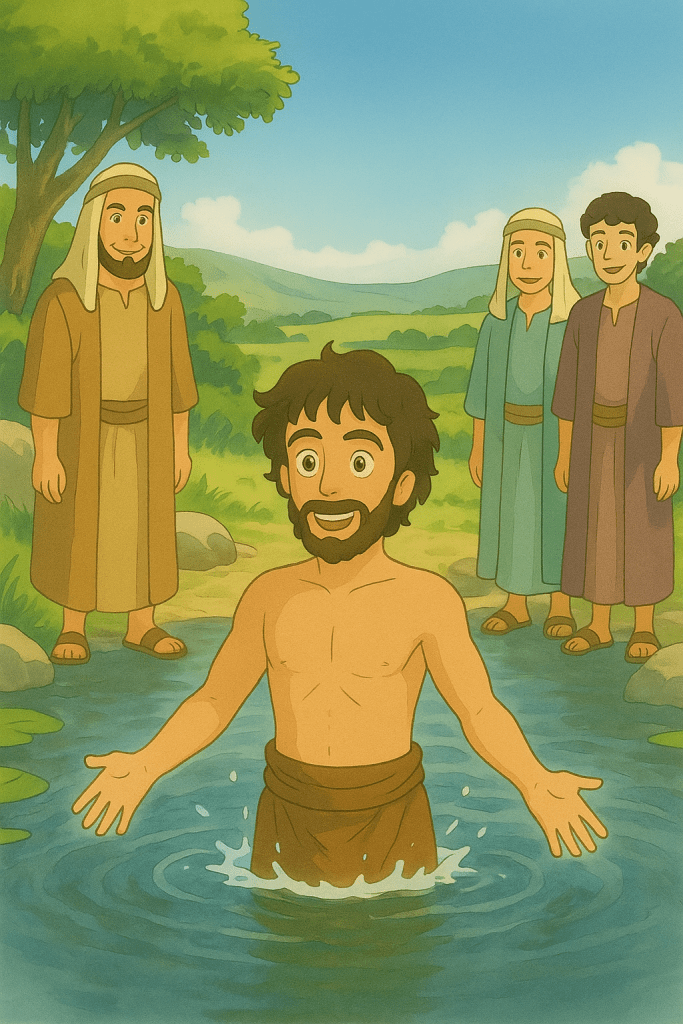
The real struggle for Naaman was not dipping into the water—it was accepting that such a great deliverance could come through something so simple. Yet when he humbled himself and obeyed, he dipped, he washed, and he came out with skin like that of a child. He was made clean. Naaman praised the God of Israel and chose to live a godly life thereafter.

Even today, many people around the world long for healing, deliverance, or breakthrough. Some are misled into believing they must endure complex, exhausting, or painful processes to receive it. But the Word of God reminds us that the greatest work has already been accomplished on the cross.

Salvation, healing, and a brand-new start are not earned by difficult rituals—they are received through a simple act of faith. All you need to do is surrender your heart to Jesus, believe that His blood can wash you clean, and accept His forgiveness.

You may wonder, “Can something this great really come from something so simple?” Yes—it can. Just as Naaman discovered, God’s power is revealed through humble obedience and simple faith.

Today, I encourage you: Believe in Jesus. Trust His Word. And you will see your life restored—filled with peace, purpose, and the joy of a new beginning.

Prayer:

Lord, thank You for Jesus Christ, who took our burdens upon the cross and cleansed our sins by His blood. Today, I accept the forgiveness He offers and the brand-new start You have given me. In Jesus’ name, Amen.

Standard
Christ, Hope, Potter , encouragement, Uncategorized

Trust the potters process

Jeremiah 18:6“As the clay is in the potter’s hand, so are you in My hand.”

This scripture beautifully illustrates God’s authority over our lives. Like a potter shaping clay, He works tirelessly—forming, refining, and molding us into something purposeful. The potter may break down and rebuild the clay again and again until it takes on the exact shape he envisions. His goal is to create a vessel that can either hold something valuable or stand as a work of art for display. When the work is complete, the potter marks it as his masterpiece.

Likewise, God—the Master Potter—holds our lives in His hands. Even in seasons of brokenness, He is not discarding us; He is reshaping us. Every press, every turn, and every remolding is part of His process to make us into vessels of honor—living testimonies of His goodness.

Further down in this passage, we see a call to repentance—an invitation to yield to His hands, like clay that does not resist the potter’s shaping. When we surrender, He can complete His perfect work in us and leave His unmistakable mark so that all can see we are His handiwork.

If your current season feels shattered, remember: you are still in the Potter’s hands. This brokenness can become your breakthrough—if you trust His process.

God bless you!

Standard