Daily Christian Devotion

Believe and Be Free

When Jesus saw that the crowd of onlookers was growing, he rebuked the evil spirit. ‘Listen, you spirit that makes this boy unable to hear and speak,’ he said. ‘I command you to come out of this child and never enter him again!’”

— Mark 9:25 NLT

One day, the Jewish leaders were arguing with the crowd. When they saw Jesus, they all ran up to Him and greeted Him. Jesus asked the crowd, “What is this argument about?” One man responded, saying that his son was possessed by a spirit that had made him mute since childhood. Whenever the spirit seized him, it tormented him physically, often throwing him into fire or water to destroy him. The father pleaded with Jesus to have compassion on them—“if you can.”

Jesus quickly replied, “Anything is possible if you believe.” The man cried out, “I believe! Help my unbelief!” Then Jesus rebuked the spirit that made the boy unable to hear and speak, commanding it to come out and never enter him again. The spirit screamed, threw the boy into another violent convulsion, and left him. Jesus then took the boy by the hand and helped him stand on his feet.

Earlier, the boy had been brought to Jesus’ disciples, but they could not cast out the demon. When they asked why, Jesus explained that certain kinds can only be driven out by prayer and fasting.

The Word of God encourages us that Jesus is here to cast out every spirit that has been tormenting us for a long time. The enemy works hard to keep us powerless by making us voiceless. He does not always appear in scary clothes with horns and sharp teeth—sometimes he comes dressed in designer clothes, looking beautiful /handsome, carrying a fancy job title, coming from a respected family, or even from our own family, appearing as a friend, a believer, or a neighbor.

The first thing the oppressor seeks to do is to silence us, preventing us from speaking out. When we are muted, he overpowers us and throws us under his control. He uses weapons like shame, fear, and loss to keep us silent—so he can keep causing chaos in our lives. When we go through this silent torment, unable to express ourselves, our bad attitudes and behaviors often surface as the overflow of our emotional suffering.

Many times, we cannot help ourselves. To others, we may simply become a topic of gossip, a matter to talk about. That is why our inner circle matters most. When we cannot believe for our own deliverance, like the father believing for his son, God places people around us to believe, pray, and plead on our behalf. The Bible also calls us to do the same—to stand in the gap and intercede for those who are helpless and voiceless.

The father only complained that his son was mute, but Jesus not only opened his mouth—He also opened his ears. This shows us that Jesus knew being deaf to the Word of God leads to losing the power to speak. Therefore, in His deliverance, He restores us completely—spirit, soul, and body.

So be alert, be vigilant, and stay rooted in fasting and prayer. The enemy comes only to steal, kill, and destroy—but the Good News is this: Jesus has come to give us life, and life in abundance (John 10:10). He loves us so much that He willingly gave up His Spirit so we could walk in freedom.

May the Lord open deaf ears to hear His voice and loosen mute tongues to speak. Even in times of exhaustion and humiliation, Jesus will hold your hand, lift you up, and help you stand on your feet again.

Believe in Him and accept the free gift of freedom. God will turn the story of your muteness into a lasting memory of deliverance.

Prayer

Lord Jesus, thank You for being the One who silences the enemy and opens our mouths to speak. Where we have been muted by fear, shame, or oppression, set us free today. Hold our hand, lift us up, and let our lives become a testimony of Your deliverance. In Your mighty name, Amen.

Standard
Daily Christian Devotion

Give It All To Him

8th Sep 2025

James 1:2–4 (ESV)

“Count it all joy, my brothers, when you meet trials of various kinds, for you know that the testing of your faith produces steadfastness. And let steadfastness have its full effect, that you may be perfect and complete, lacking in nothing.”

In a time of severe famine, when food and water were scarcely available, God still had a plan to feed His people. He instructed the prophet Elijah to go and live in the village of Zarephath, assuring him that a widow there would provide for him.

As Elijah entered the city gate, he saw a widow gathering sticks. He asked her for some water, and as she went to get it, he also asked for a piece of bread. The widow explained her desperate condition—she had only a handful of flour in a jar and a little oil in a jug. She was preparing a final meal for herself and her son, after which they expected to die.

Elijah told her, “Make a small loaf for me first, and then make some for yourself and your son. For the Lord says: The flour will not be used up, and the jar of oil will not run dry until He sends rain on the earth.” She obeyed, and as God promised, the flour and oil never ran out. They ate and were satisfied for many days.

It is striking that God chose this particular widow to sustain Elijah during famine. The Lord could have sent him to a wealthy home with plenty stored away, but instead He went to a house where there was no man to provide, no field to work, and nothing left for tomorrow. In those days, widows often survived only on the kindness of others. Yet God chose her home to reveal His power.

This widow believed she and her son would die after their last meal. Yet God asked her to give to a stranger from her very little. Humanly speaking, it sounds unreasonable—almost impossible. But when she obeyed, she discovered that her little became endless in the hands of God.

This shows us something powerful: God often selects people for blessing long before they realize it. He saw this woman in her hopelessness, her affliction, and her insecurity, and He set her apart for a miracle. The same is true for us. God may send someone into your life with a genuine need—or someone who tests your patience, time, and resources—so that through the stretching, His goodness and provision are unveiled.

What Elijah asked of the widow may have sounded ruthless, but it was the doorway to her breakthrough. Not everyone who enters your life comes with bad intentions. Some are sent by God so that through the pressing and the breaking, you will begin to produce fresh oil. We are handpicked, tested, and tried so that we may be made complete in Him.

This widow, in her darkest moment, chose to believe the promise of God. She obeyed and gave her last portion, and in return, she saw an overflowing blessing. God delights in blessing those who surrender everything to Him. He asked for her “nothing” so He could give her “more than enough.”

Give to God—even the least you have—and you will see His faithfulness take its full course in your life.

As promised, you will lack nothing:

1 Kings 17:14 (ESV)

“‘The jar of flour shall not be spent, and the jug of oil shall not be empty, until the day that the Lord sends rain upon the earth.’”

Prayer

Heavenly Father, thank You that even in seasons of famine, You are the God of abundance. Strengthen our faith to give, to serve, and to trust You fully, so that we may see Your overflowing provision and goodness in our lives. In Jesus’ name, Amen.

Standard
Daily Christian Devotion

Be available with your Little Strength

The LORD turned to him and said, “Go in the strength you have and save Israel out of Midian’s hand. Am I not sending you?” Judges 6:14

Gideon, came from the smallest tribe, Manasseh, and he was the youngest in his family. During his day, the people of Israel were overpowered by the Midianites. They made dens in the mountains and caves to escape from their enemies. The Midianites came after the Israelites’ crops and livestock. They were numerous in number and left Israel with only a few things to take back home. God allowed this because of their unfaithfulness and sin. Yet when they cried out to God for help, He sent a promising word to deliver His people.

One day Gideon was beating out wheat in the winepress to hide from the enemy. The angel of the Lord met this lowly person and called him, “Mighty man of valor. The Lord is with you.”

This man Gideon lived much of his life with disappointment and inadequacy. When the angel called him a warrior, it was contradictory to what people used to call him. His very name, Gideon, means “woodcutter.” He could not believe what the angel had spoken over him. In those ancient days, the youngest were considered least in authority and inheritance rights. It is natural for anyone to be in disbelief, considering where they came from and what they were capable of doing. The equation did not make sense when the angel called him a warrior.

But God overruled Gideon’s doubts and confirmed his calling. Judges 6 records powerful incidents where God Himself answered Gideon’s requests for confirmation. The Spirit of the Lord came upon Gideon and the people with him as they encamped against the Midianites.

Gideon brought 35,000 soldiers to fight, but God told him to reduce the number. God knew that if Israel won with such a large army, they would boast in their own strength. So Gideon sent home the fearful, cutting the number to 22,000. Still, that was too many. God gave Gideon a selection process until only 300 men remained.

This weakest clan, with the least mighty man—Gideon—was now ready to face a vast army. God said, “You are good to go. I have given this mighty army into your feeble hands.”

That night, God told Gideon to rise and go down to the enemy camp. Along with Purah, Gideon approached and overheard two Midianite soldiers sharing a dream and its interpretation: Israel would defeat them. Strengthened by this word, Gideon worshiped.

With his small force, Gideon advanced and surrounded the enemy from three sides. During the change of guard, they broke jars, lifted torches, and blew trumpets. The camp was thrown into confusion. The Midianites turned their swords against one another and fled in terror. Gideon and his men pursued them and defeated them, along the very route the Midianites once used to torment Israel.

The Word of God brings encouragement today: God can use you regardless of who you are or where you come from. He calls you a warrior. People may label you with names that make you feel inferior, but I encourage you to overhear only what God says—you are valiant.

It is okay to doubt. It is okay to feel weak. God will send you a word to strengthen you. He is not asking, “Can you do it?” He is saying, “I am sending you.” Your weakness doesn’t matter, because God Himself will be your defense and fortress. The question is, are you ready to be used by Him?

When you make yourself available, God will show up for you. With the little strength, the little talent, and even the little faith you have, He will use you to chase a vast army. As you step forward into His calling, He will send confusion into the enemy’s camp and clear your path so you can continue His work.

Your beginning may look humble, like a woodcutter, but your ending will be that of a victorious warrior. Start with the little strength you have—for isn’t it God who is sending you?

Prayer:

Lord, thank You for reminding me through Gideon’s story that You see me not as I am, but as who You have called me to be. I choose today to make myself available for Your calling. Use me, Lord, even with my little strength, for Your glory. In Jesus’ name, Amen.

Standard
Daily Christian Devotion

The Lord Will Fight For Your Beracah

“But you will not even need to fight. Take your positions; then stand still and watch the Lord’s victory. He is with you, O people of Judah and Jerusalem. Do not be afraid or discouraged. Go out against them tomorrow, for the Lord is with you!”

— 2 Chronicles 20:17 NLT

King Jehoshaphat, the fourth king of Judah, walked upright before the eyes of the Lord. He loved the Lord and followed His commandments and also brought reformation in the land of Judah that placed God under his leadership. There was peace and justice in the land of Judah.

The military power was very strong, and he had many soldiers to fight, and he stationed them around the country of Judah. God was with him and the people of Judah, and this brought fear around the neighboring kingdoms. The enemies of Judah formed their alliance to bring down and capture the land. When the messenger informed Jehoshaphat about their plan, he was afraid.

A very successful king, with strong military force and positions effectively guarding his nation, was afraid of the message about enemies approaching. When fear crept in, the first thing the king did was send out an invitation for fasting to seek the face of the Lord. When the invitation was sent, people all over the cities of Judah came along with their wives and children, fasting and praying.

King Jehoshaphat, a leader who was adored and looked upon as a mighty man, stood humbly before God in front of the assembly for help. He prayed that when disasters, sword, judgment, pestilence, or famine came upon the land, the house of Judah would stand in the house of the Lord and cry in their affliction, for they knew that He would hear and save.

He revisited what God did for the ancestors and boldly declared that He would do it again for them. The strongest military people with the king admitted that they were powerless before these alliances, and that only God alone could give victory.

God sent a word after these people humbled themselves before Him. He said not to be afraid of this great alliance and told them they would not need to fight the battle: stand firm, hold your position, and see the salvation of the Lord.

God did not ask the army to go back to their houses just because He assured that the battle belonged to the Lord. Rather, He commanded the army to go out to the battlefield and they would see the hand of God.

When the word came, Jehoshaphat was encouraged. He bowed his head, and all the people bowed and worshiped, followed by a loud voice of praise. When the day of battle came, the soldiers of Judah arose early in the morning, and the worshippers went before the army in holy attire, thanking and praising God for His steadfast love.

The three alliances—the Moabites, Ammonites, and Mount Seir—invaded Judah by climbing up 3,400 feet from the Dead Sea to the wilderness of Tekoa. The Bible says that when Judah began to sing and praise, God set an ambush against these people, and they killed each other.

Meanwhile, the people of Judah were marching towards the wilderness of Tekoa. When they arrived, they saw only corpses and dead bodies in great number. The battle was already defeated because God was involved.

The story ends like this: they came for a battle, but they carried back blessings—good clothing and precious things. They even left some behind because they had more than enough to carry home. The army of God came back with shouts of joy, noise of victory, with happiness and instruments. The place is even now called the Valley of Beraca, which means the Valley of Blessing. The surrounding kingdoms were even more fearful of the land of Judah.

The Word of God brings encouragement today that the battle belongs to God. Like Jehoshaphat, what are we afraid of? We might be mighty people with power and possessions, but when messages like this come with fear, we lose our ground and yield to fear.

Our first defeat is when we yield to fear. When fear finds a place in our lives, there is no way we can think of overcoming the situation. Our minds are already defeated before even facing the actual battle. We only find solutions to handle the defeat and cope with failure. Success will not even cross our minds, and planning for victory will not even be part of our strategy.

But King Jehoshaphat understood that this fear was mightier than the actual army coming after him. He didn’t even have to be worried because he had a strong military force and positions around his country, and yet the enemy’s message shook the ground with fear.

One person bringing one negative word is enough to break us. King Jehoshaphat was no exception from fear. Instead of yielding to it, he dealt with it, not alone, but with a company of people.

We need more than one person to defeat this fear. It emphasizes the importance of being with people of faith to acknowledge and agree with the promises of God. The story tells us the importance of seeking God’s face in the time of crisis, irrespective of how powerful, mighty, and intelligent we are.

Like Jehoshaphat, let us go low before God and surrender to Him, acknowledging that we are powerless to handle situations alone, and that He is a faithful God—yesterday, today, and forever. When we put our confidence in God, we will deal with the situation like yet another battle, and of course, yet another victory.

Let us face our battle with praise and worship. We might walk towards the wilderness, but that is where our victory is. With our own eyes we will see the problem already dealt with, the situations already handled, and the enemy already defeated.

We might have walked in looking for a battle, but God will change our situation so that we will only carry His blessings back. Only God can make shouts of praise roar in the battleground.

May our valley of wilderness become our Valley of Beracah (blessing).

Prayer

Heavenly Father,Thank You for reminding us that the battle is not ours but Yours. We surrender our fears to You and trust that You will fight for us.

In Jesus’ name, Amen.

Standard
Daily Christian Devotion

Allow God to deal the enemies His way

Romans 12:19

“Do not take revenge, my dear friends, but leave room for God’s wrath, for it is written: ‘It is mine to avenge; I will repay,’ says the Lord.

The king of Moab was threatened by the presence of the people of God. Their success made him insecure. When insecurity kicks in, people join forces against the ones they feel threatened by.

Likewise, the king joined with the elders of the Midianites. They met the fortuneteller Balaam and made a deal for a hefty price—that if he cursed Israel, he would be rewarded.

Balaam was known and believed to have words that carried weight. Tempted by the reward, he prepared to go. But the God of Israel intervened and commanded him not to go. Later, the Lord permitted him, but only on the condition that he speak what God put in his mouth.

In Numbers 23, the story unfolds. King Balak took Balaam to a high place to view Israel and asked him to curse them. Instead, Balaam blessed them.

Agitated, the king demanded to know why. Balaam said, “That is what the Lord put in my mouth.”

Still not convinced, Balak tried again. This time he showed only a fraction of Israel, hoping the curse would be easier. But Balaam blessed them even more vigorously, seeing the hand of God in their midst.

Frustrated, the king begged, “If you can’t curse them, at least don’t bless them.”

For a last attempt, Balak showed Balaam the wasteland instead of the fertile land. But the Spirit of God came upon Balaam, and he couldn’t stop praising the house of Israel.

He even prophesied that they would stand undefeated, and declared, “Whoever blesses Israel will be blessed, and whoever curses Israel will be cursed.”

Furious, Balak sent him away. But before departing, Balaam prophesied once more that the people of God would remain victorious over all their enemies.

The vengeance of God hits the enemies in unpredictable ways. The attack is not always physical. The above passage shows God’s way of revenge by turning every curse into a blessing.

Even today, we may face enemies who want us defeated—people who plot, curse, or speak against us. But the Word of God reminds us that when we love Him and obey His commandments, He works on our behalf.

There are people who gaslight us, provoke us, and expect us to lose our peace. Instead of reacting from the flesh, the Bible reminds us to mind our own business, keep building ourselves, and not give weight to their words or plans. Sometimes being still is the greatest weapon God can use—just like the people of Israel, who were unaware of the evil plan to curse them.

The Lord will frustrate the enemy by blessing you more and increasing you more. He will prove again and again that He is among you and that He fights for you.

Your house will be filled with praise, laughter, and peace. Scripture says no curse, no black magic, no power will prevail against you or your household. You will rise above every plot of the enemy.

The Lord will silence every lying tongue and set you as the head and not the tail.

So let not your anger override the vengeance of the Lord. Allow God to work on your behalf.

Prayer:

Heavenly Father, thank You for reminding me that vengeance belongs to You. Fill my house with joy, peace, and laughter, and let my life be a testimony that You fight for Your children. In Jesus’ name, Amen.

Standard
Daily Christian Devotion

Identify your Samson and Delilah

1 Peter 5:8–9

“Be alert and of sober mind. Your enemy the devil prowls around like a roaring lion looking for someone to devour.”

There is a man named Samson in the Bible. He was born to parents who had been barren for a long time. God promised them a son, saying his name would be great and that he would save the people of Israel. But Samson was to be consecrated to God. He was not to drink wine, eat unclean food, or have his head shaved ever. The strength of Samson was hidden in his hair, but more than that, the Spirit of God rested upon him, making him the strongest man in Israel.

His enemies feared his physical strength and the power of God’s Spirit when he attacked. No one could defeat this mighty man. For many years, Samson judged Israel, and time after time his enemies plotted to trap and kill him. Yet he was quick-minded, and with his clever defenses he defeated countless enemies single-handedly.

Eventually, his enemies grew weary of failing against him. They found a woman named Delilah and persuaded her to seduce Samson and discover the secret of his strength so they could overpower him. Unfortunately, Samson fell in love with her. Delilah tried to uncover his secret. Three times he gave her false answers, and each time she immediately called the Philistines to test him. But they failed, because the Spirit of God still rested on him.

At last, she attacked him emotionally, saying: “How can you say, ‘I love you,’ when your heart is not with me?” The Bible says she pressed him with her words day after day until his soul was vexed to death.

Finally, Samson opened his heart to her and revealed the truth, explaining that a razor had never touched his head because he had been consecrated to God from his mother’s womb. He confessed that if his head were shaved, his strength would leave him, and he would become as weak as any other man.

That was the downfall of Samson. Delilah lulled him to sleep on her knees, called the Philistines, and had them shave off the seven locks of his hair. Once the Lord’s strength left him, he became weak and vulnerable. His enemies seized him, gouged out his eyes, bound him, and threw him into prison.

In the end, Samson realized his mistakes, called upon God, and with renewed strength from the Lord, pulled down the pillars of the temple, defeating his enemies one last time. His story reminds us why we must remain alert and sober-minded.

The Bible describes a sober-minded person as one who has a disciplined mind, self-control over thoughts and emotions, and freedom from intoxicating influences or negative passions—a person with sound judgment and right actions. Samson, though strong in body, became foolish in mind. Even after Delilah betrayed him three times, he ignored the warning signs. Blinded by deception, he revealed his heart to the wrong person.

Samson could handle physical attacks, but when the attack came in the name of love, he lost his discernment. Sharing your heart with the wrong person will bind you and lead to defeat.

We all face “Samson and Delilah” moments. The Bible warns that the enemy is always ready to exploit our weaknesses, often disguising traps in the name of love. When the enemy sees your strength, your gifts, and the impact you make in your family, community, and workplace, he will send Delilahs to corrupt, deceive, and weaken you.

Some kinds of attacks do not even come with swords or spears. They come with sugar and honey, with deception on lips packed with beauty.

You may once have been a person with a calm and clear mind, but now find yourself flooded with Delilah’s words pressing down on your thoughts, intoxicating and hindering your judgment.

The Word of God urges us: “Be sober, be clear-minded.” Identify the calling of God in your life. Stay aware of the direction you are heading. Ask God for wisdom to discern those who bring intoxicating influence. Pray for His guidance to expose lying tongues and manipulative spirits.

Invite the Holy Spirit to be your companion, so that even when words press heavily on your spirit, He will strengthen you to overcome the enemy. God’s Word will be a lamp to your feet and a light to your path.

God has given you the gift of free will. Choose wisely—and choose for His glory.

Prayer

Heavenly Father, thank You for the warning and wisdom in Your Word. Help me to be alert and sober-minded, guarding my heart and mind against deception. Fill me with Your Spirit, so that my thoughts, words, and choices honor Yo u In Jesus’ name, Amen.

Standard
Daily Christian Devotion

God Will Rewrite Your Story

“Yet what we suffer now is nothing compared to the glory he will reveal to us later.” Romans 8:18 NLT

I would like to share an inspiring real-life story that even came as a movie to encourage people to believe and to hope.

A young couple in a small village in India was losing their babies on the third day after delivery. She lost three or five babies that way. Later she was admitted in a Christian hospital to deliver her sixth child. A baby boy was born on March 19, 1947.

The baby was struggling to survive, and on the third day she went to the bishop in the chapel and poured out her grief and anguish. The bishop prayed, named him Yesanna, and prophesied that he would become a great man of God.

When the boy was 10 years old, he was tormented by demonic spirits and wandered the streets without a right mind. He was terminated from school because of his unstable mind. He wandered around, roaming as a mad man, vomiting blood, sleeping on footpaths and railway platforms, living a miserable life. At times, he even ate from the garbage.

On February 15, 1964, this young boy was wandering the streets as usual and was led to a Christian cottage meeting happening outside a house. The worship songs and praises caught his attention, and he went and sat inside.

After the meeting was over, around 11 p.m., a bright light shone on him. As he turned, he saw the face of the Lord Jesus Christ in dazzling light, and he was healed immediately. That same night, after seven years, he went back to his home with a sound mind.

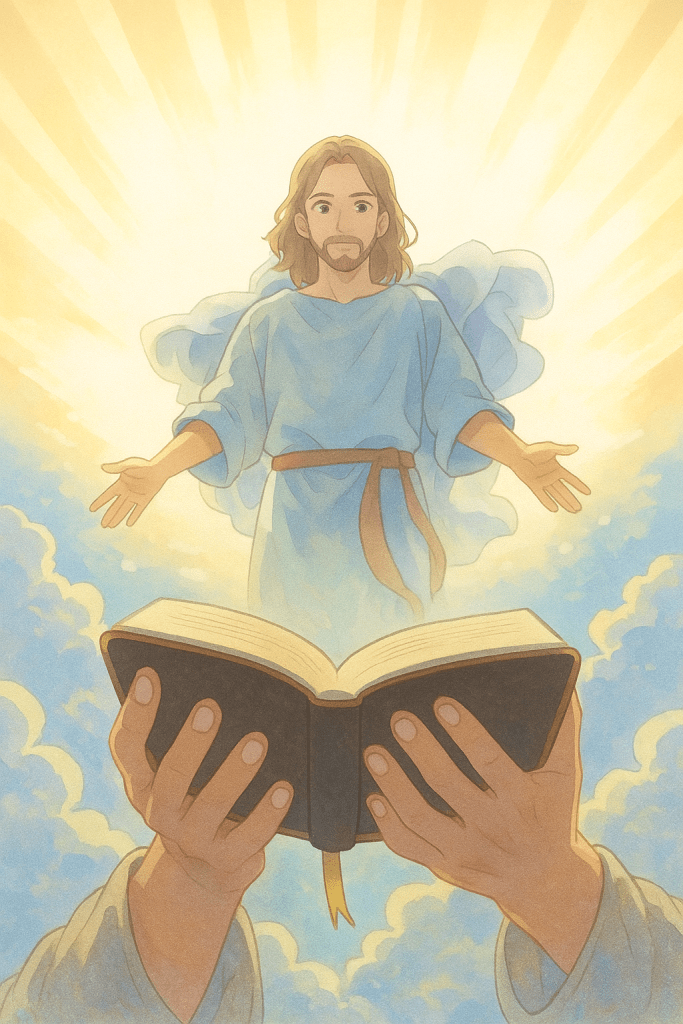
The next day he visited the man of God he had met the previous night. The pastor explained how Jesus healed him, referred him to the Bible, and handed him one. From that time, the young man gave his life to Jesus, began reading the Bible continually, fasting and praying regularly.

At the age of 19, he dedicated his life to ministry, and God started to use him mightily. For over 40 years of ministry, God worked through him. He went to be with the Lord at the age of 67.

This brother, Yesanna, is the founder of Hosanna Ministries, which transformed many lives. Without television or social media, he would gather more than two million people every year and feed them as well. He transformed the state of Andhra Pradesh in South India by his powerful testimony, miraculous healings, and many witnesses during his ministry. I hope his ministry continues to carry his legacy.

This minister of God is an example to encourage us that God is still in the life transformation business today.

In the Bible, it talks about a woman named Rahab who lived in the city of Jericho. She was a prostitute, placed on the social margins of society. Despite being a Canaanite woman in her own land, Rahab demonstrated strong faith and extraordinary courage. She saved the spies from Israel, hid them from the soldiers who came to kill them, and helped them escape from the city.

Before they left, she begged them to show mercy to her father, mother, brothers, and sisters and spare their lives when Joshua’s army came back to take over the city. The spies kept their promise, and when Jericho was destroyed, Rahab and her family alone were spared.

This woman was not only spared from death, but she also received redemption. A name people would be ashamed to call was written into the genealogy of the Messiah, Jesus Christ (Matthew 1). God could have easily bypassed this “unclean” woman, but His redemption shows us that He does not look at social status, family dignity, or how bad the situation is. He only sees faith.

Redemption found its way into this humble woman’s house because of the love she had for Yahweh. Every time we read about the birth of Jesus, we are reminded of Rahab. After 29 generations, God changed her story from being called a harlot to being remembered in the lineage of the Redeemer.

In the same way, God can rewrite your story. Just as He changed Brother Yesanna from a “mad man” into a minister of God, He is ready to rewrite your story as well.

What is your story? Give it to Jesus as it is. He will rewrite the script, change the direction, and the climax will be a glorious one.

As the Scripture reminds us, your present suffering is nothing compared to the glory you will see soon. Give it to Him—the Author and Finisher of our faith.

Prayer

Thank You, Lord, for the gift of redemption through the blood of Jesus Christ. Today, in faith, I give my story to You. May my story declare Your goodness, and may Your glory be revealed through me. In Jesus’ name, Amen.

More about Brother Yesanna’s ministry:

https://hosannaministries.co

Standard
Daily Christian Devotion

He Heals the Brokenhearted

Psalm 147:3

He heals the brokenhearted and binds up their wounds.

One man, holding his broken pottery, walked into a shop believing it could be fixed. This potter’s shop looked delicate yet beautiful, displaying great craftsmanship. The man felt disappointed because this pottery was once his chandelier—the first thing anyone noticed when they entered his house. It was not only beautiful but also part of the home’s identity.

He then went to a place where the art of Kintsugi was practiced—the Japanese craft of restoring broken pottery with lacquer mixed with powdered gold, silver, or platinum. The shattered vessel was placed into the gentle hands of a skilled workman, who carefully gathered each fragment and set them back in place. With patience, he sealed the cracks with lacquer and dusted them with gold, transforming the once-broken pottery into something even more beautiful than before.

When the workman handed the finished pottery back to the man, he was overjoyed. He carried it home, hung the chandelier, and displayed it under the light. The brokenness had become the beauty of the pottery. The cracks now formed a unique pattern through the master’s workmanship, and the pottery became even more valuable. Under the light, its beauty was admired by everyone who saw it.

Similarly, in our lives, we may go through seasons of brokenness that seem beyond repair. The pain you carry may refuse to be comforted. The disappointments you bear may feel unfair. A once beautiful life—where people praised and honored you—may seem shattered into pieces. The very people who once valued you may now treat you as if you are worthless.

But the Word of God brings encouragement: walk straight into the hands of the Master Craftsman who created you in your mother’s womb and called you by name (Jeremiah 1:5). The blood of Jesus covers your pain, shame, and guilt caused by brokenness. He heals your bruised soul and crowns you with goodness. Just as the cracks in the pottery were filled with gold, your scars will be covered with His glory.

The very things people once looked down on you for will become the very things God uses to display His power. When you carry the light of God, people will not only see His light but also glorify the Master. You will never be the same. Your brokenness will bring hope and healing to others. Your words will carry value, and your life will reflect God’s divine love.

So, do not delay in giving your brokenness to Him—whether it is relationships, sickness, poverty, or lack of knowledge. The Master Workman, Jesus, is waiting with care and comfort. He will not simply put the pieces back the way you imagined but far beyond human comprehension. Once in His hands, you are changed—forever redeemed.

Prayer

Dear Heavenly Father, thank You for Jesus Christ and for His blood that heals the brokenhearted. Today, I give You my life, my situations, and my brokenness. I pray that You bring healing and that Your name be glorified in my life. In Jesus’ name, I pray, Amen.

Standard
Daily Christian Devotion

It Is Time To Open Your Eyes

John 9:6–7 ESV

“Having said these things, he spit on the ground and made mud with the saliva. Then he anointed the man’s eyes with the mud and said to him, ‘Go, wash in the pool of Siloam’ (which means Sent). So he went and washed and came back seeing.”

In the summer of 2004, municipal workers were digging in the City of David to repair a sewer line. Suddenly, as the dust settled, the outline of two ancient steps appeared. Archaeologists rushed to the scene, and what followed was a breathtaking discovery—the Pool of Siloam, the very place where Jesus healed the blind man.

This pool was more than a source of water—it was a testimony of God’s faithfulness. Fed by the Gihon Spring through King Hezekiah’s tunnel, it sustained ancient Jerusalem both physically and spiritually. It symbolized God’s continual provision and grace. Here, people performed purification rituals, celebrated, and lifted songs of praise in the temple. Yet later, because of the people’s unfaithfulness to their faithful God, both the city and the pool were destroyed, and the stream was silenced.

It was at this very place that Jesus encountered the man born blind—one who had never seen light since birth. He lived only by sound, touch, and the emotions of life around him. As Jesus passed by with His disciples, the man became the subject of their questions. Jesus answered them by declaring, “I am the light of the world.” He not only proclaimed this truth—He demonstrated it.

Jesus spat on the ground, made mud, anointed the man’s eyes, and instructed him to wash in the Pool of Siloam. The man obeyed, washed, and returned seeing.

This miracle revealed a deeper truth: sin and unfaithfulness blind us from recognizing and enjoying God’s provision, peace, and blessings.

While God’s goodness continually flows into our lives, we must ask ourselves: what has blinded us from experiencing His mercy? The pressures of this world easily shift our focus from God’s nature and trap us in darkness, where we see only our problems. The lust of the flesh distances us from His love, and pride in our hearts convinces us that we can live above God.

Like the blind man, many today sit in isolation—hearing the joy of others but unable to join in, excluded from fellowship, unable to praise because of the darkness within.

But the Word of God speaks hope: you have been rejected for too long, blinded for too long. Today Jesus invites you to wash in the pool of living water. His touch will bring light to your life and open your eyes to experience the ever-flowing goodness of God.

The blind man not only received his sight but also became a living testimony of God’s power and love. Now it is your turn, get ready to be washed and to see again like never before. Darkness has no authority when you walk in fellowship with the Light of the World—Jesus.

Prayer

Heavenly Father, thank You for being the Light that pierces my darkness. Forgive me for the times I have been blind to Your goodness and unfaithful to Your calling. Wash me in Your living water and open my eyes to see Your grace, provision, and love. Guide my steps so that I may walk in Your light and live in worship and fellowship with You. In Jesus’ name, Amen.

Standard
Christ, Hope

God Sees Us Differently

1 Samuel 16:7

“The Lord does not look at the things people look at. People look at the outward appearance, but the Lord looks at the heart.”

A man named Jesse lived in Bethlehem with his eight sons. Jesse was a farmer and a sheep breeder. His older sons served as soldiers in Israel’s army, alongside the king. But the youngest, David, was only a shepherd and a skilled musician.

God instructed the prophet Samuel to anoint one of Jesse’s sons as the future king of Israel. After the ceremonial cleansing and sacrifice with Jesse’s family, Samuel began to search for God’s chosen one. His eyes were immediately drawn to Jesse’s oldest son. Tall, strong, and already a leader in the army, the prophet assumed he must be the one. But the Lord quickly corrected him, saying, “Do not look at his appearance or his height, for I look at the heart.”

Jesse, too, likely felt disappointed. In those times, the eldest son usually carried the family’s honor, responsibility, and leadership. His eldest seemed perfectly fit to be king—with strength, skills, and military experience. Yet Samuel rejected him. One by one, Jesse presented his sons, but each time the prophet said no.

After showing all seven of his sons, each with an impressive profile, Jesse finally said to the prophet that he had no more who were qualified to be king. But Samuel was not convinced, because he knew for certain that God had sent him on this mission. He asked Jesse, “Are these all the sons you have?”

Reluctantly, Jesse replied, almost as an excuse: “Yes, but he is out in the field taking care of the sheep.” The father who eagerly presented his older sons showed no enthusiasm to present David. In Jesse’s eyes, David was fit only to tend sheep and play music when needed. David did not even cross his earthly father’s mind. But God already had a rescue plan prepared, choosing the humble young shepherd boy.

While Jesse saw David as running after sheep, God was training him to fight bears and lions. While his brothers used arrows and swords in the army, God trained David to snatch lambs from the mouth of wild beasts. These were practical lessons in how to love, care for, and rescue people. His brothers were taught to dress like warriors, but David was clothed with strength from God.

The prophet was adamant to see David and even refused to eat until David was brought before him. What the earthly father failed to see, the Heavenly Father had already planned. When Samuel saw David, he anointed him, and God placed a future king on the throne.

This word encourages us today: we serve a God who sees what others fail to notice. God has a plan for you, no matter how lonely or humiliated your place may look. He is building resilience, forming strength, and preparing you in secret. Your gifts and talents may even be suppressed by your own loved ones, but God will send help—just as He sent Samuel—to reveal the identity He has marked for you.

Human effort, without a heart aligned to God’s values, will be rejected. But the Lord, honors the humble, redeems the rejected and makes the kind-hearted into a king, a leader for His glory. Just as David became king, one day you too will sit before the Lord and sing with gratitude:

“Who am I, O Sovereign Lord, and what is my family, that you have brought me this far?”

—2 Samuel 7:18 (NLT)

Prayer

Dear Heavenly Father, thank You for not seeing me the way people see me. Thank You for working in my life, even when I feel hidden or overlooked. Today I choose to trust Your plans and stand in faith, believing You are preparing me for greater things. In Jesus’ name I pray, Amen.

Standard