Daily Christian Devotion

We are ambassadors for Christ

“Therefore, we are ambassadors for Christ, God making his appeal through us. We implore you on behalf of Christ, be reconciled to God. For our sake he made him to be sin who knew no sin, so that in him we might become the righteousness of God.” 2 Corinthians 5:20–21 (ESV)

It is an undeniable fact that we deal with two different kingdoms—two different worlds. One is filled with light, joy, and peace, while the other is filled with fear, pain, and darkness.

Every day we tend to oscillate between these two kingdoms—the dark and the light.

The dark kingdom can be very attractive, I don’t see much effort needed to remain in darkness—the Scripture says that we live in a fallen world where the path is wider, the access is easy, and the trap is sure.

Whereas, to walk in the light, we must pick up our own cross and deny ourselves. Yes, the path is narrow, and we face struggles along the way, but when we choose the light, there is peace through it all.

In this world, every country has its own ambassadors—citizens who represent their nation, speak on its behalf, and act in its best interest. They are chosen carefully, expected to dress well, communicate effectively, and maintain integrity in both their personal and professional lives.

The Bible says that we are ambassadors for Christ and that our citizenship is in heaven, which means we represent the heavenly kingdom.we are a chosen generation, and that the enemy wages war against our souls.

It is impossible to live in darkness and still represent Christ. You cannot serve two masters or be loyal to both. Darkness and light cannot coexist —you must quit one and serve the other.

Living in darkness simply means living in sin, and sin represents ignorance of God or the rejection of Him. Darkness hides things—sins we don’t want others to see.

The Bible mentions sin as,

“For from within, out of the heart of man, come evil thoughts, sexual immorality, theft, murder, adultery, coveting, wickedness, deceit, sensuality, envy, slander, pride, foolishness.”

Mark 7:21–22 (ESV)

When Christ’s light comes, He exposes sin. When we repent, Christ’s light shines through us, expelling the darkness and bringing us into the kingdom of His marvelous light.

If you are making a decision to quit, quit darkness and walk into the door of glorious light that Christ has kept open for you. When you do so you become a new creation in Christ, you are given a new name. You are clothed with a new garment and given a new identity as the ambassadors of Christ.

You can remain in this marvelous light only when you read the manifesto of the Kingdom of Heaven—that is, the Bible.

“Your word is a lamp to my feet and a light to my path.”

Psalm 119:105

May you remind yourself that you will be lost without the Word of God leading you.

Prayer:

Heavenly Father, thank You for calling me out of darkness into Your marvelous light. Help me to walk daily as Your ambassador, clothed in righteousness and guided by Your word. Let Your light shine through me so others may see You. In Jesus’ name, Amen.

Standard
Daily Christian Devotion

In The Fire and Furnace Stand Your Ground

“Blessed be the God of Shadrach, Meshach, and Abednego, who has sent his angel and delivered his servants, who trusted in him, and set aside the king’s command, and yielded up their bodies rather than serve and worship any god except their own God.” Daniel 3:28 ESV

It is always those who stand their ground who face backlash, accusations, and fiery trials—situations that burst like fireworks.

The rest simply flow along with the crowd—adopting people’s ideologies, customs, gods, and lifestyles. Such people will have no haters because they have no distinct identity or voice of their own. They do not mind worshiping other images or obeying foreign voices.

But in this passage, we see how God moves powerfully on behalf of those who stand their ground to please Him.

Shadrach, Meshach, and Abednego—three young Jewish men—were taken from slavery and placed in positions of authority in Babylon. Yet, they remained steadfast in their faith. They refused to participate in any practice or worship that would displease Almighty God.

One day, King Nebuchadnezzar made an image of himself and commanded everyone under his rule to bow down and worship it. All the people obeyed—except these three young men. They refused to bow before any image, even when the king threatened to throw them into a blazing furnace. But this threat did not intimidate them, and they responded boldly to the king:

“If this be so, our God whom we serve is able to deliver us from the burning fiery furnace,

and he will deliver us out of your hand, O king.

But if not, be it known to you, O king, that we will not serve your gods

or worship the golden image that you have set up.”

Daniel 3:17–18 (ESV)

Furious with their response, the king ordered the furnace to be heated seven times hotter than usual and commanded that the three be thrown into it. Meanwhile, the rest of the people lived comfortably—bowing to new images, serving multiple gods and goddesses, and adjusting easily to every new custom or decree. They did not want to face the king’s wrath or be separated from society. They preferred the safe zone, and to such people, anyone who stands firm in faith seems like a threat.

As the king curiously watched, he suddenly leaped in astonishment. “Did we not throw three men bound into the fire?” he exclaimed. “But I see four men, unbound, walking around in the fire unharmed—and the fourth looks like a god!”

When he called them out of the furnace, Shadrach, Meshach, and Abednego stepped out without even a trace of harm. The fire had not touched them—not a hair on their heads was singed, their clothes were not scorched, and there was no smell of smoke upon them.

The officials, governors, and advisers who witnessed this miracle were amazed. The same king who once threatened them now praised the God of Shadrach, Meshach, and Abednego, declaring that no other god could rescue in such a way. He even decreed that anyone who spoke against their God would be severely punished. Later, the three were promoted to even higher positions in the province.

This passage reminds us that we, too, may face fiery furnace-like situations when we stand our ground for God. Some people easily compromise, accepting anything that pleases others, even when it displeases the Lord. They hide their convictions, worship the image of others, and seek human approval more than God’s will.

But God’s Word calls us to fear Him and keep His commandments. Everything you do—what you see, say, and pursue—matters deeply to Him. Make choices that please God, even if it means walking through the fire. Stand your ground in alignment with the Word of God. The furnace may look terrifying, but take courage—Jesus will be with you in the midst of it.

In the fire, you will walk freely with Him. The flames will have no authority over you. You will emerge untouched and unharmed by the trials meant to destroy you. Not even the trace of accusation or slander will remain upon you.

God’s deliverance will not remain a secret—it will be witnessed by those who once expected your downfall. Instead of ashes, God will give you a crown of praise that glorifies His name.

So stand your ground. Preserve your voice for truth. And watch the mighty hand of God move on your behalf.

Prayer

Heavenly Father,

Thank You for being with me in every fiery trial. Strengthen my heart to stand firm in faith, even when the world bows to other gods. Help me to fear You above all else and to choose what pleases You, no matter the cost. Let Your presence sustain me through the fire and bring glory to Your name through my life.

In Jesus’ name, Amen.

Standard
Daily Christian Devotion

Use The God Given Authority

“You will trample upon lions and cobras; you will crush fierce lions and serpents under your feet! The Lord says, ‘I will rescue those who love me. I will protect those who trust in my name.’”

Psalm 91:13–14 NLT

I had a life-changing opportunity to go on a mission trip along with my church to a rural part of South India. That trip deepened my desire to commit and serve the Lord wholeheartedly.

The church we visited was located near a sugarcane field, and the minister’s house stood right in the middle of it. The church didn’t even have a solid floor—it was filled with sand. It looked like a very humble place of worship, yet the believers there were rich in love and on fire for God.

It was a retreat for young girls, and the invitation had gone out to several nearby villages. Despite some incidents that prevented public transportation, the girls still managed to come—by walking, cycling, or carpooling on motorbikes. We had a wonderful time ministering to them. They were fed with spiritual food and filled with the Holy Spirit.

Later that afternoon, we were invited to have lunch at the minister’s home. The path to his house was narrow and muddy, surrounded on both sides by sugarcane. We had to walk carefully.

While we were having lunch, I noticed a photo on the wall and asked when it was taken. It was a picture of the minister posing with a huge, dead poisonous cobra—more than seven feet long! Curious, we asked him to tell us more.

Because they lived in the middle of the fields, snakes were a common sight. He shared how once a snake had grabbed a duck right before their eyes, and how they often found snakes near their doorstep or even in the bathroom.

I grew terrified just listening, wondering what would happen if a snake were under the table where we sat. Yet his two teenage children, who were serving us lunch, seemed completely unbothered. We asked, “Weren’t you scared?” Their immediate response was, “No, not at all! We have Jesus Christ with us.”

Then they shared the most astonishing story. During a youth convention at their church, while they were worshiping and being filled with the Holy Spirit, a snake had crawled onto the sand-filled floor. These teenagers were so immersed in worship that they didn’t even notice it. At the end of the service, they discovered the long snake dead under their feet—trampled and crushed—while the girls were completely unharmed.

When they told that story, I was instantly reminded of Psalm 91 and how God protected believers who were under the wings of the Almighty.

After lunch, we spoke with the young girls and asked about the snake incident. They casually said, “Oh yes, Sister! We’ve even seen poisonous scorpions dead in the church on other days.” I looked at them in awe because these kinds of divine interventions seemed to them like an everyday occurrence.

To me, these young girls looked like warriors—fearless and full of joy. I could see that the joy of the Lord had become their strength. Every mouth exalted the name of Jesus, even in the midst of danger.

I’m not sure if I would have that same courage if I saw a cobra, but I realized that even the most dreadful situation is powerless under the shadow of the Almighty.

This scripture gives us confidence that whoever dwells in the shelter of the Most High will abide in the shadow of the Almighty. When you take refuge in His presence, no harm will overtake you, and no disaster will come near your dwelling.

Not only that, God has given you authority to take dominion over every power and principality through the blood of Jesus Christ.

You under the power of Satan or he under your feet depends on how powerfully you exercise your authority in Christ.

If looking around threatens you, look up to seek the Lord’s help and look down to read the Word of God. Then, in you, the Spirit of God will give strength to overcome it all.

You are victorious in every situation—a living testimony of God’s mighty hand at work. So get up from your lame self to walk over the scorpions and snakes.

Prayer:

Dear Lord, thank You for being my refuge and my fortress. Teach me to dwell in Your presence and not fear what surrounds me. Fill me with Your Holy Spirit, that I may stand firm and fearless in every battle. Let my heart be steadfast, trusting in You, and may Your joy be my strength all the days of my life.

In Jesus’ mighty name, Amen.

Standard
Daily Christian Devotion

The Chosen Ones Receive the Signet Ring

On that day, declares the Lord of hosts, I will take you, O Zerubbabel my servant, the son of Shealtiel, declares the Lord, and make you like a signet ring, for I have chosen you, declares the Lord of hosts.”

Haggai 2:23 (ESV)

A signet ring is no ordinary ring. It represents a family, an organization, a kingdom, or even the identity of an individual.

This ring is made of superior quality, marked with symbols, initials, or emblems.

In olden days, the signet ring was used to stamp official documents. The king used his signet ring to execute orders or sign decrees. When the scroll carried the king’s official seal, it meant the command could not be changed or overruled.

Often, the king would hand over his signet ring to a trusted person to act on his behalf. The one who held that ring carried power and authority to make decisions and execute royal orders.

Unlike today’s systems, where an executive order can be challenged or revoked, once the ancient king’s seal was stamped, the matter was settled—it was a done deal.

The king would only entrust this ring to someone trustworthy, brave, and loyal—someone he believed would execute his will wisely. Since the one wearing the signet ring represented the kingdom and bore the king’s image, any misuse of that authority could bring dishonor or destruction to the king’s name and reign. So it was not easy to earn that trust or carry that identity.

Even if you had ten rings on ten fingers, the signet ring had no equal—it carried the highest value and meaning.

The word for today was given through the prophet Haggai to Zerubbabel, who was leading the temple restoration. Tracing back his lineage, he belonged to the royal bloodline of David—whose descendants ruled the nation generation after generation.

But a curse had fallen on King Jehoiachin (Zerubbabel’s grandfather) that none of his descendants would ever sit on the throne of David because of their disobedience and wickedness.

(Jeremiah 22:24–30)

Three months after Jehoiachin ruled, the people were taken into exile in Babylon, and as the curse continued, his son never took the throne.

Yet, in Haggai 2:23, the Lord spoke through the prophet Haggai and reversed that curse. God restored power and authority to Zerubbabel, declaring him His chosen one—the signet ring of the Lord.

Jesus Christ, who is an incarnation of God the Father, holds the signet ring to reverse the curse and restore the power and authority to us. Anyone who believes in Him, worships Him, and walks in His way shares the same authority and power that Jesus has.

The Bible brings so much hope through Jesus Christ, who also belongs to the royal lineage of David and is the chosen one by the Father. The good news is, God, the almighty also calls us the chosen ones. (1 Peter 2:9)

You are not separated by countries, boundary lines, bloodlines, family lines, or beliefs. The Bible simply brings hope that anyone who believes in Jesus Christ and His work on the cross.

No matter how broken your situation may look, how impossible restoration may seem, or how deeply wounded you may feel—emotionally or physically.

The Root of David, the Lion of the tribe of Judah, will intervene on your behalf .

Jesus Christ took up that cross to reveal your true identity. You are a trusted ally in the kingdom of God and with that authority, speak life over your situation.

Wear the signet ring of the Kingdom with humility and integrity to display God’s goodness and share the good news.

Heaven is counting on you.

Prayer

Heavenly Father,

Thank You for calling me Your chosen one and restoring my authority through Jesus Christ.Even when life feels broken or uncertain, remind me that I carry Your mark—Your signet ring of love and power.Help me walk in confidence, speak life over my circumstances, and reflect Your kingdom wherever I go.

In Jesus’ name, Amen.

Standard
Daily Christian Devotion

Leave Vengeance to God

“Beloved, never avenge yourselves, but leave it to the wrath of God, for it is written, “Vengeance is mine, I will repay, says the Lord.””

Romans 12:19 ESV

“As I believer in Jesus Christ, the most useless and time-wasting act anyone can do is to take vengeance against someone to destroy or plot their fall.”

The Bible advises us not to seek vengeance, but to forgive with the same grace that has been given to us through Jesus Christ.

Forgiveness puts out the fire, while vengeance is like setting an entire forest ablaze.

It takes enormous energy to plot and carry out revenge. It drains you physically, mentally, and emotionally. And in the end, vengeance rarely succeeds it often backfires, causing more harm to you than to those you sought to destroy.

True vengeance belongs only to God. The Bible reveals that God takes vengeance personally and promises to repay evil in His time and His way.

The Bible records a powerful example of God’s vengeance.

King Joash was made king in an unusual way. His wicked grandmother, Athaliah, had murdered the entire royal family to seize power. But the high priest, Jehoiada, rescued baby Joash and hid him in the temple for six years.

When Joash was seven years old, he was revealed and crowned as king. Under the guidance of the high priest Jehoiada, Joash did what was right in the eyes of the Lord. But after Jehoiada’s death, Joash abandoned God and turned away from godly practices, leading the people astray.

God sent prophets to warn him, but Joash rejected them all. Among those prophets was Zechariah, the son of Jehoiada, the very man who had saved Joash’s life and mentored him.

In a shocking act of betrayal and ingratitude, Joash deceived the people and ordered Zechariah to be stoned to death in the temple courtyard. As Zechariah was dying, he cried out, “May the Lord see this and avenge!” appealing to God for justice against the king who repaid kindness with murder.

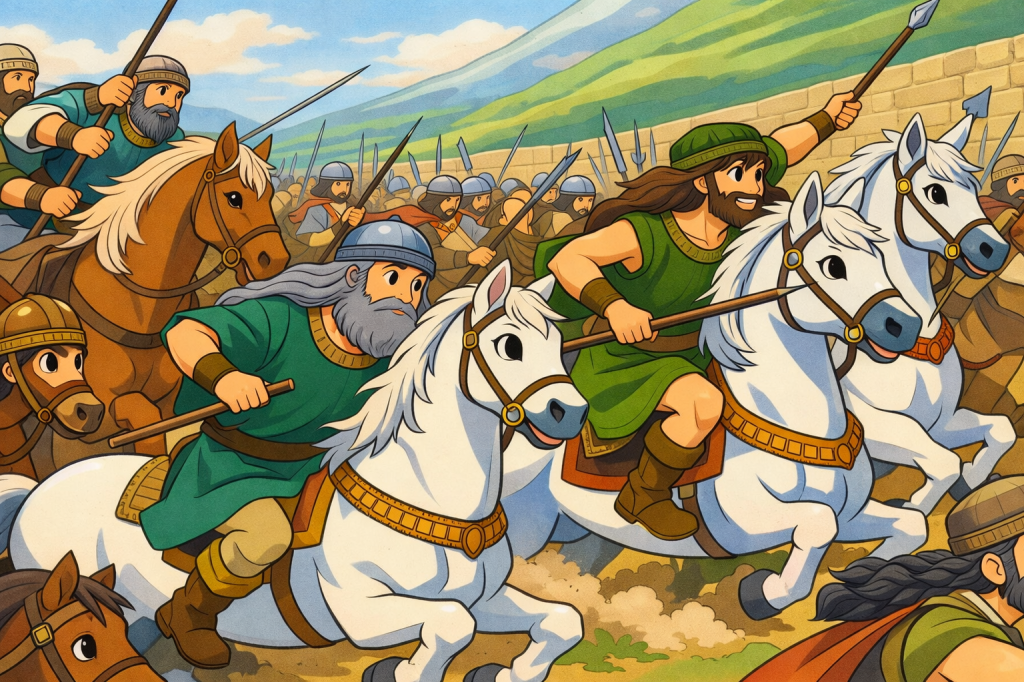
God’s judgment came swiftly. The Aramean army invaded Judah. Though they were a small force, God delivered the much larger army of Judah into their hands. Joash was severely wounded, and later assassinated in his bed by his own officials. He was denied burial in the royal tombs, bringing dishonor to his reign and his generation.

God avenged the blood of Zechariah and brought shame to the house of Joash. (2 Chronicles 24)

This story reminds us that God is involved in every detail of your life. He sees your pain and understands the betrayal you’ve experienced.

The backstabbing and the heartbreak from loved ones have not gone unnoticed. The ungratefulness of family or friends has not been forgotten. The very hands you once held may have pushed you down but God has seen it all.

So listen: give it to the One who owns vengeance. God has promised, “It is mine to avenge; I will repay” (Romans 12:19).

He will repay in such a way that the situation and even the people who caused it will lose their power over you. God’s vengeance not only brings justice to the ungrateful but also blesses you in ways that put your enemies to shame.

Do not waste your strength holding on to rivalry. Instead, save your energy to experience the great blessing that God has prepared for you one so glorious that even your enemies will envy it.

Prayer:

Heavenly Father, help me to surrender my pain and desire for revenge into Your hands. Teach me to forgive as You have forgiven me. Let me trust in Your justice and find peace in Your presence. Replace my bitterness with Your blessing, and let Your vengeance bring glory to Your name. In Jesus’ name, Amen.

Standard
Daily Christian Devotion

God Will Finish the Good Work He Started

Philippians 1:6

“And I am sure of this, that he who began a good work in you will bring it to completion at the day of Jesus Christ.”

Sanballat, Tobiah, and Geshem were influential figures during the time of Nehemiah. When Nehemiah came with a small group to Jerusalem to rebuild the fallen walls, the task seemed impossible. The walls were in ruins, and the city looked beyond repair.

When Nehemiah inspected the damage, those three officials laughed and despised the very thought of restoration. But despite their mockery, Nehemiah and his team kept building—brick by brick, installing doors and windows, shaping the temple walls.

When the enemies saw that progress was being made, they became furious. They insulted the builders, mocking them, saying their wall was so weak that even a fox walking on it would cause it to collapse. But Nehemiah did not quit—he cried out to God and continued. Soon, the wall was rebuilt to half its height around the city.

Again, Sanballat, Tobiah, and Geshem plotted with anger, planning to fight against the workers and throw them into confusion. Once more, Nehemiah prayed for protection, and the people guarded the city as they built. The workers grew tired and discouraged, and threats of violence grew stronger. So Nehemiah encouraged them, declaring that God will fight for us. From then on, only half the men built while the others stood guard. Some built with one hand and held their weapon in the other. Everyone carried their weapon, ready to defend what God had called them to do.

Though challenges continued, Nehemiah’s team finished the wall, leaving only the gates. Again, the enemies tried to deceive Nehemiah, inviting him to a meeting to harm him. But Nehemiah prayed, committed his enemies into God’s hands, and pressed forward. Finally, the doors were set in place, the work was completed, and the enemies’ plans were utterly crushed. Their influence was broken, and God’s people rejoiced in His mighty hand.

Nehemiah was never intimidated by threats or politics. He was confident that what God had started, God Himself would finish.

Even in your life, you may face Sanballat, Tobiah, and Geshem. At first, they may remain quiet, but when they see your vision rising above them, they will begin to stir. They may laugh at you and mock your dreams, but when that does not stop you, they will plot in every way to distract you, discourage you, and even threaten you.

But remember this: keep building your vision with one hand, and hold the weapon of God’s Word in the other. Your enemies may try to magnify their threats, but God magnifies His promises. For them, your vision may look weak, but with God, it will stand strong.

Like Nehemiah, pray through the mockery, insults, and discouragement. Exalt God, and He will fight for you. Your vision, your passion, your family, your calling—will be built brick by brick.

While your enemies scoff, your God will complete the good work He started in you. In the beginning, you may only see dust and rubble, but be encouraged—it will end in glory.

Whatever your situation, don’t stop. Don’t stop trusting. Don’t stop believing. Don’t stop walking in relationship with God.

He who began the good work in you will surely bring it to completion.

Prayer

Heavenly Father, thank You for beginning a good work in my life. Strengthen me when I grow weary, and remind me that You will finish what You started. May every enemy plan be defeated, and may Your glory shine through the work of my hands. In Jesus’ name, Amen.

Standard
Daily Christian Devotion

Your Shame Will Be Rolled Away

Joshua 5:9 NLT

“Then the Lord said to Joshua, ‘Today I have rolled away the shame of your slavery in Egypt.’ So that place has been called Gilgal to this day.”

God had spoken to His people through Moses that He would bring them out of slavery and that He would give them a land flowing with milk and honey, where they would increase, multiply, and be blessed so they could freely worship Him.

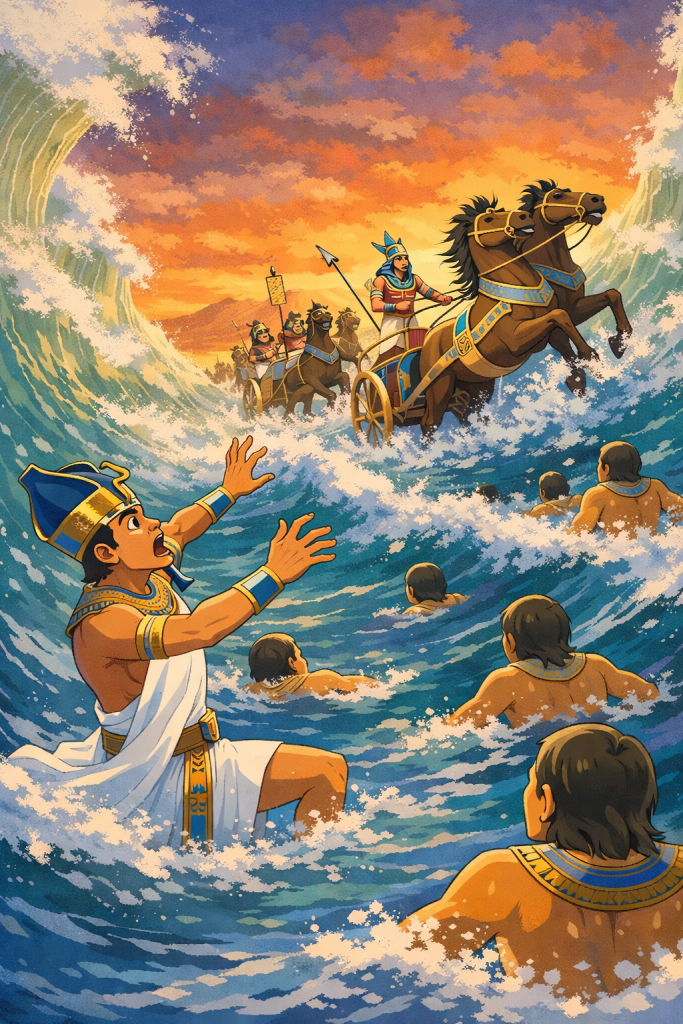
These people were oppressed for 400 years together with their ancestors, families, friends, toddlers, teens, and the rest of the younger generation. It must have taken radical courage to convince one another to move forward. On top of this, the mighty Egyptian army chasing and Red Sea in front of them was testing their faith over fear .

God had performed wonders and miracles to deliver them from suffering. Although God brought these people out of slavery and humiliation,living under a taskmaster and under the authority of the oppressor for many years had shaped the way they thought.

They breathed fear. They heard only words of discouragement. They saw only failures. They walked only in distress. They gossiped, talked, and laughed all under slavery—and about their slavery.

Their expectations for life were barely minimal, and the Promised Land seemed more dream than reality.

Along the way, whenever they faced a hiccup in the journey, they stopped, feared, and murmured. At times, they even longed to go back to Egypt rather than press forward into freedom.

Later, they were tried and tested in food, water, disease, war, and natural disasters. Recovery from oppression was not a short walk; it took forty years to see a breakthrough and taste victory. The wilderness became a place where unbelief cost many their lives, and only a few made it to the Promised Land.

Joshua, the current leader after Moses, was leading the people of God to cross over the Jordan into the Promised Land. Crossing the Jordan was the final step before entering the land of promise. God told them to set up twelve stones as a testimony, a reminder that the slavery of Egypt was behind them. At this moment, the roles were reversed—the oppressed were now free, and their enemies around them were the ones trembling.

Here, God also commanded Joshua to circumcise all the males so that they could enter and enjoy the fullness of the Promised Land. And at this very place, God said to Joshua: “Today I have rolled away the shame of your slavery in Egypt.” That place was called Gilgal.

The Word of God encourages us that He, too, will roll away the slavery of our lives. You may be tried and tested in your journey. Your path may be filled with fear and uncertainty. You may even want to hide from people to escape shame and mockery. Maybe you are recovering from trauma, struggling, and walking through a never-ending wilderness.But God is saying to you: There is a Gilgal for you.

This Word comes to you today with hope: God will lead you to your Gilgal—the place where the shame of your youth, the struggles of your past, and the fear of oppression will be rolled away. Moreover your Gilgal is the place where God restores dignity.

But just as the Israelites had to be circumcised in their flesh, we too must allow God to circumcise our hearts—to cut away unbelief, bitterness, and fear. When the heart is surrendered, the promise becomes clear.

So lift your head. The wilderness is not your home. Shame is not your identity. You are on your way to Gilgal—the place where shame is rolled away, and the future of God’s promise unfolds before you.

Prayer

Heavenly Father, thank You for being the God who rolls away shame. Just as You brought Israel out of Egypt and into the Promised Land, bring me out of my wilderness seasons and into the place of freedom and promise. Lead me to my Gilgal, where the slavery of my past is gone forever. In Jesus’ name, Amen.

Standard
Daily Christian Devotion

A Room For Peace And Prosperity

“I will establish the oath that I swore to Abraham your father. I will multiply your offspring as the stars of heaven and will give to your offspring all these lands. And in your offspring all the nations of the earth shall be blessed.”Genesis 26:3–4 ESV

Isaac, the firstborn of Abraham and Sarah, lived during a time of famine. God instructed him to stay in Gerar in Palestine as a foreigner. God promised to bless him, just as He had promised Abraham.

Isaac planted seeds during the famine, and he harvested a hundredfold because of the favor of God. He not only became rich but also exceedingly prosperous in livestock, herds, and servants. His blessings continued to grow.

The blessing upon him made no sense to others. He planted during famine—a dry time, with no water, no favorable condition to grow crops. To others, it looked like a waste of time and resources. Yet his livestock multiplied, his crops flourished, and his wealth grew. The Bible does not say God sent rain—his only resource was God’s promise and His faithfulness.

But as we know, when others see us blessed, jealousy often rises. The Philistines around Isaac became very jealous and asked him to leave. They even filled the wells that Abraham’s servants had dug. Isaac’s blessing made them fearful.

Yet Isaac did not contend with them. He moved away and restored the wells his father had dug, renaming them. On top of that, he discovered a fresh well. But the local herdsmen quarreled with Isaac’s men and claimed it. So Isaac’s men named the place Esek, which means argument or contention.

Isaac did not fight back. He moved on and dug another well. Again, the locals claimed it, and that place was named Sitnah, meaning enmity. Still, Isaac’s men did not argue. They moved on and dug yet another well—and this time no one contended for it. Isaac named it Rehoboth, meaning room, for the Lord had made space for them to flourish.

As the Bible says,

“When a man’s ways please the Lord, he makes even his enemies to be at peace with him.”Proverbs 16:7 ESV

Then King Abimelech came to Isaac in peace, admitting that he could see the favor and blessing of the Lord upon him. He acknowledged that God was with Isaac, and together they made a peace treaty. That very day, Isaac’s men found water, and the well was named Shibah—the well of oath. The city has been called Beersheba to this day.

The Word of God encourages us today that even in days of famine and uncertainty, God’s unfailing promise and favor will remain with us. When people around us see the hand of God in our lives, jealousy will rise. They may compare their lives with ours, and jealousy can grow into contention and enmity. They may even claim what belongs to you—your friends, family, possessions, positions, and property.

Like Isaac carried God’s promise and kept moving forward, we too must press on. Like Isaac restored and renamed the wells of his father, we should also dig and restore the wells of gifts and talents that were once covered and hidden—re-creating our lives for His glory.

Instead of pouring our energy into arguments and enmity, let us use our time wisely to rebuild our lives and bless those around us. In God’s time, He will open for us a Rehoboth—a well of blessing—where we will flourish in the land of the living. Your Rehoboth will even attract your enemies to make peace with you. The favor of God will cause others to testify, “Surely, God is with you.”

Isaac began his journey in Gerar (the lodging place). Through jealousy (Esek) and enmity (Sitnah), he was pushed to discover Rehoboth (room), and finally, he arrived at Beersheba—close to the promised land.

Every challenge, every argument, every contention that rises against the blessing of God in our lives will only serve to push us closer to the fulfillment of His promises. May we receive our portion as we move forward in God’s favor, carrying His promise and walking in His call.

“Don’t settle in the place of contention—keep digging until you reach your Rehoboth.”

Prayer

Heavenly Father,

Thank You for Your unfailing promises that sustain us even in times of famine and uncertainty. Help us to build, restore, and walk in peace as we carry Your promise.

In Jesus’ name, Amen.

Standard
Daily Christian Devotion

God Will Intervene In The Great Betrayal

For the Lord had determined to defeat the counsel of Ahithophel, which really was the better plan, so that He could bring disaster on Absalom!”

2 Samuel 17:14 NLT

Absalom, one of David’s sons, was on a mission to become the next king. He tried to overthrow David’s kingdom before his time and crown himself. To win people’s hearts, he began acting like the “kind ruler.” Every morning, he stood at the city gate to meet those who came for judgment. He would say, “It’s too bad there is no one to hear your case—if only I were judge in the land!” When people bowed before him, he refused their bow but instead took them by the hand and kissed them, pretending to care deeply. He continued this for four years until he stole the hearts of the people.

Absalom also deceived many of David’s counselors, including Ahithophel, David’s most trusted advisor, whose counsel was considered as if it came from God. But Ahithophel carried a long-standing bitterness toward David and used this chance to betray him by joining Absalom’s side.

When David realized his own son and his most trusted counselor had risen against him, he fled with a small group of soldiers, family members, bodyguards, and advisors, carrying the ark of the covenant with them. On the way, a loyal guest insisted on staying with David, vowing to remain with him in life or death.

David climbed the Mount of Olives weeping, barefoot, and covering his head in sorrow. When he heard that Ahithophel had sided with Absalom, he prayed: “Even my close friend, whom I trusted, he who shared my bread, has lifted up his heel against me” (Psalm 41:9). He asked God to turn Ahithophel’s wisdom into foolishness.

God answered. Absalom, who normally followed only Ahithophel’s counsel, unusually sought a second opinion from Hushai, David’s loyal friend who had returned to Absalom pretending loyalty. Hushai gave advice that contradicted Ahithophel, and Absalom chose to follow instead. Hushai secretly warned David, giving him time to escape.

When Ahithophel saw that his advice had been rejected, he went home and hanged himself. Later, Absalom too was killed in battle. If Absalom had followed Ahithophel’s original plan by sending 12,000 soldiers, David’s life would have been in grave danger. But God overruled the wisdom of man and turned it into foolishness.

We are reminded of Absaloms and Ahithophels in our own lives. It is very unfortunate that we live in a world where even our own friends, family, and trusted alliances can turn against us. The same people who spend time eating and drinking with us might have a hidden agenda. They might rise against us, gathering others to defeat us. We may even see them grow stronger and stronger while we grow weaker and weaker. Like David, we might be moaning and weeping over the great betrayal from our own.

The Bible teaches us to build an altar of worship in the time of crisis, just as David did on the Mount of Olives. How many may ever come against you, making plans to devour—be encouraged to know that we have a God in heaven, who sees our cry, feels our pain, and knows our wandering and weeping. The same God who turned the wise man Ahithophel’s advice against him will do the same for you.

The enemies hoped to overpower us, but God will make quite the opposite happen.

David patiently waited, hoping in God, and God kept him safe. In the same way, He will keep us in His safe haven and subdue our enemies in due time. Our very own can disown us, but God will send strangers to be on our side to strengthen us.

The Lord will turn Ahithophel’s advice of destruction into a memorable victory.

Prayer:

Lord, thank You that You are our refuge and our stronghold. Help us to trust in Your timing and Your plans, knowing that what was meant for our destruction, You can turn into a memorable victory. In Jesus’ name, Amen.

Standard
Daily Christian Devotion

Give It All To Him

8th Sep 2025

James 1:2–4 (ESV)

“Count it all joy, my brothers, when you meet trials of various kinds, for you know that the testing of your faith produces steadfastness. And let steadfastness have its full effect, that you may be perfect and complete, lacking in nothing.”

In a time of severe famine, when food and water were scarcely available, God still had a plan to feed His people. He instructed the prophet Elijah to go and live in the village of Zarephath, assuring him that a widow there would provide for him.

As Elijah entered the city gate, he saw a widow gathering sticks. He asked her for some water, and as she went to get it, he also asked for a piece of bread. The widow explained her desperate condition—she had only a handful of flour in a jar and a little oil in a jug. She was preparing a final meal for herself and her son, after which they expected to die.

Elijah told her, “Make a small loaf for me first, and then make some for yourself and your son. For the Lord says: The flour will not be used up, and the jar of oil will not run dry until He sends rain on the earth.” She obeyed, and as God promised, the flour and oil never ran out. They ate and were satisfied for many days.

It is striking that God chose this particular widow to sustain Elijah during famine. The Lord could have sent him to a wealthy home with plenty stored away, but instead He went to a house where there was no man to provide, no field to work, and nothing left for tomorrow. In those days, widows often survived only on the kindness of others. Yet God chose her home to reveal His power.

This widow believed she and her son would die after their last meal. Yet God asked her to give to a stranger from her very little. Humanly speaking, it sounds unreasonable—almost impossible. But when she obeyed, she discovered that her little became endless in the hands of God.

This shows us something powerful: God often selects people for blessing long before they realize it. He saw this woman in her hopelessness, her affliction, and her insecurity, and He set her apart for a miracle. The same is true for us. God may send someone into your life with a genuine need—or someone who tests your patience, time, and resources—so that through the stretching, His goodness and provision are unveiled.

What Elijah asked of the widow may have sounded ruthless, but it was the doorway to her breakthrough. Not everyone who enters your life comes with bad intentions. Some are sent by God so that through the pressing and the breaking, you will begin to produce fresh oil. We are handpicked, tested, and tried so that we may be made complete in Him.

This widow, in her darkest moment, chose to believe the promise of God. She obeyed and gave her last portion, and in return, she saw an overflowing blessing. God delights in blessing those who surrender everything to Him. He asked for her “nothing” so He could give her “more than enough.”

Give to God—even the least you have—and you will see His faithfulness take its full course in your life.

As promised, you will lack nothing:

1 Kings 17:14 (ESV)

“‘The jar of flour shall not be spent, and the jug of oil shall not be empty, until the day that the Lord sends rain upon the earth.’”

Prayer

Heavenly Father, thank You that even in seasons of famine, You are the God of abundance. Strengthen our faith to give, to serve, and to trust You fully, so that we may see Your overflowing provision and goodness in our lives. In Jesus’ name, Amen.

Standard