Christ, Hope

God Sees Us Differently

1 Samuel 16:7

“The Lord does not look at the things people look at. People look at the outward appearance, but the Lord looks at the heart.”
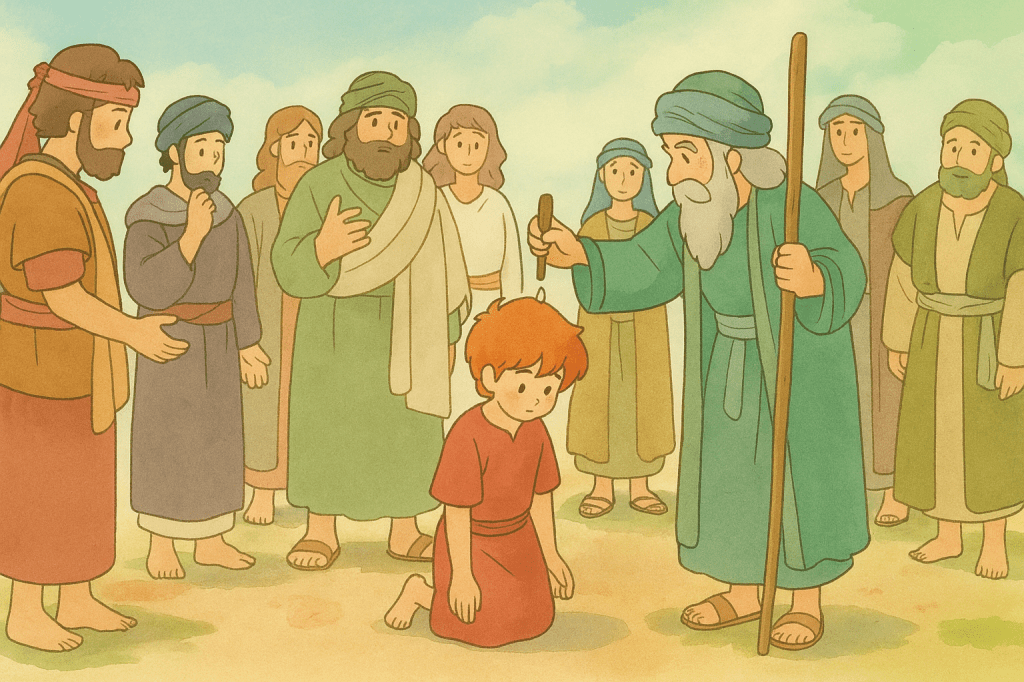
A man named Jesse lived in Bethlehem with his eight sons. Jesse was a farmer and a sheep breeder. His older sons served as soldiers in Israel’s army, alongside the king. But the youngest, David, was only a shepherd and a skilled musician.

God instructed the prophet Samuel to anoint one of Jesse’s sons as the future king of Israel. After the ceremonial cleansing and sacrifice with Jesse’s family, Samuel began to search for God’s chosen one. His eyes were immediately drawn to Jesse’s oldest son. Tall, strong, and already a leader in the army, the prophet assumed he must be the one. But the Lord quickly corrected him, saying, “Do not look at his appearance or his height, for I look at the heart.”

Jesse, too, likely felt disappointed. In those times, the eldest son usually carried the family’s honor, responsibility, and leadership. His eldest seemed perfectly fit to be king—with strength, skills, and military experience. Yet Samuel rejected him. One by one, Jesse presented his sons, but each time the prophet said no.

After showing all seven of his sons, each with an impressive profile, Jesse finally said to the prophet that he had no more who were qualified to be king. But Samuel was not convinced, because he knew for certain that God had sent him on this mission. He asked Jesse, “Are these all the sons you have?”

Reluctantly, Jesse replied, almost as an excuse: “Yes, but he is out in the field taking care of the sheep.” The father who eagerly presented his older sons showed no enthusiasm to present David. In Jesse’s eyes, David was fit only to tend sheep and play music when needed. David did not even cross his earthly father’s mind. But God already had a rescue plan prepared, choosing the humble young shepherd boy.

While Jesse saw David as running after sheep, God was training him to fight bears and lions. While his brothers used arrows and swords in the army, God trained David to snatch lambs from the mouth of wild beasts. These were practical lessons in how to love, care for, and rescue people. His brothers were taught to dress like warriors, but David was clothed with strength from God.

The prophet was adamant to see David and even refused to eat until David was brought before him. What the earthly father failed to see, the Heavenly Father had already planned. When Samuel saw David, he anointed him, and God placed a future king on the throne.

This word encourages us today: we serve a God who sees what others fail to notice. God has a plan for you, no matter how lonely or humiliated your place may look. He is building resilience, forming strength, and preparing you in secret. Your gifts and talents may even be suppressed by your own loved ones, but God will send help—just as He sent Samuel—to reveal the identity He has marked for you.

Human effort, without a heart aligned to God’s values, will be rejected. But the Lord, honors the humble, redeems the rejected and makes the kind-hearted into a king, a leader for His glory. Just as David became king, one day you too will sit before the Lord and sing with gratitude:

“Who am I, O Sovereign Lord, and what is my family, that you have brought me this far?”

—2 Samuel 7:18 (NLT)

Prayer

Dear Heavenly Father, thank You for not seeing me the way people see me. Thank You for working in my life, even when I feel hidden or overlooked. Today I choose to trust Your plans and stand in faith, believing You are preparing me for greater things. In Jesus’ name I pray, Amen.


Standard
Christ

All things Will Work For Our Good

Romans 8:28

“And we know that for those who love God all things work together for good, for those who are called according to his purpose.”

Once, a group of friends set out to explore a beautiful deserted island. During the journey, their ship collided with hidden rocks and was destroyed. Sadly, the entire crew perished—except for one young man. With all his strength, and by clinging to pieces of the broken ship, he managed to swim ashore.

Though he survived, he was left in deep pain and fear, mourning the loss of his friends. He screamed for help day after day, but his voice only echoed back at him. As time passed, he realized no one was coming. Slowly, he began to accept his situation. Gathering the remains of the wreckage, he built a small shelter. After many attempts, he learned how to make fire, survive on fish, and drink coconut water.

One evening, after lighting a campfire, he went a little distance to collect sticks. When he returned, he was horrified to see his small wooden hut engulfed in flames. Everything he had worked so hard to build was destroyed. In despair, he cried out to God, shouting, weeping, and cursing in his hopelessness. That night, he fell asleep brokenhearted.

But the next morning, he was awakened by the sound of a ship approaching the shore. The captain called out through a megaphone, asking if anyone was on the island. Overwhelmed with joy, the young man shouted back, waving his arms. He was rescued at last!

Curious, he asked the captain how they had found him. The captain replied, “We saw the flames rising high into the sky and knew someone must be alive here.” At that moment, the young man realized that what he thought was his greatest loss was actually the very thing God used to bring his rescue.

This is how God works. Even in our darkest, most painful situations, He turns everything around for our good when our lives are surrendered to Him.

Romans 8 is one of the most powerful chapter in Scripture. It reveals the steadfast love of God and the privilege of sonship through Jesus Christ, by whom we can call Him Abba, Father. The Sovereign God is your loving Father. This Father does not abandon you, nor does He keep record of your failures or sins . Nothing—absolutely nothing—can convince Him to withdraw His love for you. He went so far as to give His only Son, Jesus Christ, so that through Him we may be brought close to the Father.

We cannot impress God with mere works; it is faith in Jesus that pleases Him. When we invite the Holy Spirit into our lives, He revives our mortal bodies, strengthens our souls, and fills us with hope. No matter how fearful or hopeless your situation may seem, the Lord promises to work all things together for your good—not just some things, but all things—when you trust Him as your Abba Father.

Prayer

Dear Heavenly Father,Thank You for the privilege of calling You Abba, Father. Give us the grace to trust that You are working all things together for our good. Strengthen our faith in Jesus, and help us to rest in Your unfailing love. In Jesus’ name I pray, Amen.

Standard
Christ, Uncategorized

I’am His And You Are Mine

“Fear not, for I have redeemed you; I have called you by name, you are mine.”

— Isaiah 43:1

This is the true story of an eight-year-old girl who grew up in a village where strict religious rules were enforced. She was forced into marriage with a middle aged man—a religious leader who had already been married several times. To the villagers, marriage was portrayed as a gift from God, but for this young girl, it became a prison.

While she longed to run and play freely outside, she was weighed down with heavy garments and jewelry. Her days were filled with fear and anxiety. The wedding night was a traumatic experience, leaving her with pain, shame, and silence. She learned to obey without question and spoke only when spoken to, becoming a servant in her husband’s household.

By the age of eleven, her husband had brought another wife—just sixteen years old. That girl advised her to stay quiet, for that was all she herself had learned. At twelve, the young girl’s body began to change, and soon she was pregnant. She suffered greatly during her pregnancy and nearly died while giving birth at thirteen. The experience left her broken, filled with anger, emptiness, and questions about God and the injustice she endured.

One day, while secretly using her husband’s old phone, she stumbled upon videos of people sharing their testimonies about Jesus. Though she had been taught that even speaking His name was forbidden, she was drawn to the truth and freedom in their stories. That night, she whispered, “Jesus, come to me.”

In a dream, Jesus appeared, pulling her from a dark pit and saying, “You are not forgotten. You are loved. You are mine.”

In the midst of hostility and fear, she found peace. She discovered freedom and began to read the Bible secretly on a downloaded app. With each page, she gained strength and courage. When her cousin later discovered her reading Scripture, she confronted her. But the young girl refused to deny Jesus, because she had found unshakable boldness in His Word.

Her refusal led to violent persecution. She was locked up, beaten, threatened with fire, and accused of being possessed. Bruised and bloodied, she eventually escaped with the help of a local person. She found refuge with a Christian woman who cared for her and introduced her to a community of believers who had endured similar suffering.

Today, she testifies that Jesus has given her peace, love, and a sense of belonging. Though healing is a process—with scars and flashbacks—she draws strength from God’s presence. Now she helps others who have been abused, silenced, or forgotten, offering them hope and freedom in Christ.

You may not be that young girl in her situation, but you may know the feeling of being fearful, of being left alone, unheard, or of having dreams shattered. The Bible reminds us that the Lord sees your fear and says to you: “Fear not.”

The same Lord who found His way into her locked doors is here today, assuring you: “I have redeemed you.” You may not see a drastic change in your situation right away, but slowly and surely He will set you free and give you peace.

Scripture says, “I have called you by name,” which means the Lord knows the details of your situation—the family you come from and what you are facing right now. He assures you that you are not abandoned or forgotten. He says: “You are mine.”

He owns you, He owns your problems, and He takes ownership of your future to give you hope and everlasting joy. Give it all to Jesus and watch Him handle you with care.

Prayer

Dear Lord, thank You for reminding me that I am never forgotten. You know me by name and call me Your own. I give You my fears, my hurts, and my broken dreams. Fill me again with Your love, and give me peace that only You can give. In Jesus’ name, Amen.

Standard
Christ, Uncategorized

Weight Of The Pain Pebbles

Come to me, all who labor and are heavy laden, and I will give you rest.” – Matthew 11:28 (ESV))

There was once a little bird in a rainforest that collected pebbles. Each pebble represented a burden—a sorrow, a painful memory, or a difficult lesson from the past. The bird believed these “pain pebbles” were valuable treasures, reminders that made it stronger. But as the pouch of pebbles grew heavier, the bird’s flight became more difficult and painful.

An old wise owl observed the bird and asked, “Are you truly living in the present, or just carrying the weight of yesterday?” But the little bird ignored the advice and continued collecting pebbles. Over time, its wings grew weaker and fragile until they finally broke. Unable to fly, the bird began walking with the heavy pouch strapped to its back.

One rainy day, the weight became unbearable. The bird slipped, and the very burden it had been carrying crushed it. By the time help arrived, it was too late. The owl sighed and said, “The past was meant to guide us, not to weigh us down.”

Many of us live like that little bird. We treat our burdens as treasures—carrying them everywhere we go. Even at joyful occasions, such as weddings, dressed in beautiful clothes, we still cling to our dirty pouch of pain pebbles. We struggle to lay them down, because we do not fully trust anyone to care for our burdens. In the end, these weights rob us of our joy, drain our strength, and keep us from dancing freely.

We carry these burdens into our workplaces, schools, homes, social gatherings, and even places of worship—only to carry them back again. But the truth is this: the weight of burdens will eventually crush us physically, emotionally, and spiritually.

The good news is that God offers us a safe place to lay them down—at the feet of Jesus. Here, there is no judgment about the size or nature of your burden. Whether big or small, Jesus handles it with love and care. He not only receives your burden but also gives you peace and a way forward.

Carrying the weight of the past prevents us from enjoying the present and moving into the future. The Bible encourages us to forgive, to let go, to move forward, and to live in peace. Remember—burdens are meant to be laid down, not carried.

Prayer

Dear Heavenly Father,

Thank You for inviting me to lay down my burdens. Thank You for the cross. Today, I come boldly and cast every weight I carry at Your feet, believing You will handle each one with care. In Jesus’ name, I pray. Amen.

Standard
Christ, Uncategorized

An Invite To Taste

“Oh, taste and see that the Lord is good!”

Psalm 34:8 ESV

Out of the great revival, many missionaries came to Northeast India to spread the gospel. The region of Assam was home to many tribes, known to be aggressive and even headhunters. Into this hostile community, a group of missionaries from the American Baptist Mission came to preach the message of love, peace, and hope found in Jesus Christ to the Garo tribe.

In this challenging environment, one man named Nokseng, together with his wife and two children, accepted Jesus as their personal Savior. His faith began to influence others, and many gave their lives to Christ. However, the village chief grew angry. He summoned the family who had first accepted Christ and demanded that the man publicly renounce his faith—or face death.

Moved by the Holy Spirit, the man declared: “I have decided to follow Jesus.” Furious, the chief ordered his two children to be killed with arrows. As their bodies fell to the ground, the chief gave him another chance: “Renounce your faith, or I will kill your wife.” The man replied: “Though no one goes with me, still I will follow.” Enraged, the chief ordered his wife to be killed as well.

Finally, the chief gave one last chance for the man to deny Christ and save his own life. His final words were: “The cross before me, the world behind me—no turning back.” He was then killed like the rest of his family.

But the story did not end there. The chief, who had ordered the killings, was deeply moved by such faith. He wondered why a man, his wife, and children would willingly die for someone who lived in a faraway land centuries ago. Convicted, he realized there must be an extraordinary power behind their faith, and he wanted to experience that love. The chief himself confessed Jesus as Lord and declared his faith publicly.

When the villagers heard their chief, they too accepted Christ as Lord and Savior. The man’s last words became the inspiration for the famous hymn: “I Have Decided to Follow Jesus. No turning back, no turning back.”

In the Bible, we also read about David, a warrior who once fled for his life. To escape death, he even pretended to be insane before his enemies (1 Samuel 21). In that desperate moment, David later wrote: “Taste and see that the Lord is good” (Psalm 34:8). A warrior, running for his life, still testified of God’s goodness and encourages us to do the same.

Both this martyred family and David remind us that even in life-or-death situations, it is the love and peace of God that satisfies the soul. When you truly taste the goodness of God, you will decide to follow Him—and never turn back.

Today, I invite you: Jesus has set a place for you at His table. Come, taste His goodness. I am confident that you too will never turn back.

Prayer

Lord, thank You for Your love, Your goodness, and Your peace. Give me the opportunity to know You more deeply and to taste Your goodness, so that I may never turn back. In Jesus’ name, I pray. Amen.

Standard
Christ, Uncategorized

The Power Of Exchange

and raised us up with Him and seated us with Him in the heavenly places in Christ Jesus.” (Ephesians 2:5–6)

There was a beggar at a railway station who had been begging for a long time. People gave him alms each day. One day, he approached a well-dressed businessman for alms. The businessman asked him whether he had ever given anything to anybody. The beggar replied, “No.” Then the businessman said, “If you have never given anything, you have no right to ask for anything in return.”

The beggar walked away in great sadness and began to think. He realized that in order to receive, he must first give. While staring at the platform, he noticed wildflowers growing beside the railway track. He plucked them and returned to the platform. This time, when people gave him money, he gave them a flower in return. To his surprise, this brought smiles and joy to those who gave. People began to give more cheerfully, and he received more than before.

There was now an exchange—of joy, happiness, and even respect. After a few months, he met the businessman again. This time, when he asked for alms with flowers in his hand, the businessman smiled and gave him a large sum of money in exchange for the flowers. The beggar went back, not only with more money but with joy in his heart.

Many years later, he returned to the same railway station—no longer to beg, but to board a train. He was now well dressed. As he sat down, he happened to meet the same businessman. The businessman looked at him and asked, “Do I know you?” The former beggar replied, “Yes, I am the one you once spoke to about the greatness of exchange.” He went on to explain how he had started a flower business a few years ago, and now he was heading to a meeting to expand it. The businessman smiled and greeted him with joy and respect—not as a beggar this time, but as a fellow businessman.

The Bible reminds us of the greatest exchange:

“Even when we were dead in our trespasses, [God] made us alive together with Christ—by grace you have been saved—and raised us up with Him and seated us with Him in the heavenly places in Christ Jesus.” (Ephesians 2:5–6)

While we were still sinners, Christ died for us. A great exchange took place upon the cross—Christ offered Himself for our sins so that we could be set free from the consequences of sin, which bring death. Not only physical death, but also grave-like situations such as fear, absence of peace, sickness, shame, and guilt. In exchange, Jesus offers joy, peace, and healing.

Today, there is an open invitation: give your heart, your circumstances, and your sicknesses to Him, and receive your portion from the exchange that was accomplished on the cross.

Remember—whatever you need, God invites you to give in exchange. If you want love, give love. If you desire respect, give respect. If you long to be treated kindly, then treat others kindly. And if you seek blessings, be a blessing to others.

Just as the beggar was lifted to sit as an equal with the businessman, the Word of God declares that the grace of God will make us sit with Christ in heavenly places.

Prayer

Dear Heavenly Father, thank You for the great exchange and for offering us the chance to partake in it through the cross. Today, give us the grace to offer our circumstances, situations, and sicknesses in exchange for Your joy, peace, and healing. In Jesus’ name I pray, Amen.

Standard
Christ, Uncategorized

For such a time as this… Act

“Who knows if perhaps you were made queen for just such a time as this?” – Esther 4:14 (NLT)

Queen Esther was a Jew, an orphan raised by her cousin Mordecai, who cared for her as his own daughter. In God’s providence, Esther was chosen to participate in the royal selection process to become queen of Persia. The Bible tells us that Esther was very beautiful, and she found favor with everyone around her. After months of preparation—both physical and mental—Esther won the king’s favor and was crowned queen.

Though she now lived in the palace, Mordecai continued to watch over her, faithfully staying at the city gate. He advised her to keep her Jewish identity hidden, trusting God’s timing and plan. From her orphaned childhood to her royal throne, God’s favor was upon her.

In time, an official in the palace plotted to destroy all the Jewish people. When Mordecai learned of this, he urged Esther to intercede with the king on behalf of her people. At first, she hesitated—knowing that appearing before the king uninvited could cost her life. But Mordecai reminded her, “If you remain silent at this time, relief and deliverance for the Jews will arise from another place… And who knows but that you have come to your royal position for such a time as this?” (Esther 4:14).

Strengthened by faith, Esther called for three days of fasting and prayer. She chose courage over fear, determined to do the right thing even if it meant death. God honored her obedience, granting her favor with the king, and through her boldness, the Jewish people were saved from destruction.

There may have been many women more qualified by worldly standards, but God chose Esther. Out of countless others, His hand of favor rested on her to fulfill a greater purpose. And Esther did not keep this favor to herself—she used it to rescue her people.

The word of God encourages that the favor and blessings we receive are not meant to be hoarded but shared. God places us in unique positions—not for our comfort alone, but to act on behalf of the helpless, to speak for the voiceless, and to defend those who cannot defend themselves.

If we close our hearts to the needs of others, we should not be surprised when God withholds favor from us. For Scripture reminds us, “With the measure you use, it will be measured to you” (Matthew 7:2).

Today, may we embrace the opportunities God gives us to show mercy and favor. Who knows? Perhaps you, too, are where you are for such a time as this.

Prayer

Dear Heavenly Father, thank You for the favor and help we have received. Give us the grace and boldness to show favor to others and to speak up for them. In Jesus’ name I pray, Amen.

Standard
Christ, Hope, Uncategorized

Move Forward With Your Identity

“You come against me with sword and spear and javelin, but I come against you in the name of the Lord Almighty, the God of the armies of Israel, whom you have defied.” 1 Samuel 17:45

David was a shepherd boy who usually brought food to his brothers in the army every day. One day, he happened to see Goliath, the giant, who came out day after day for forty days, exposing the inability of the Israelite army to defeat him. All the soldiers were humiliated by the giant, but David volunteered to fight him.

He expressed his willingness to face Goliath. King Saul tried to convince him that the giant had been a warrior since his youth. But David did not accept Saul’s words. Instead, he laid down his “CV,” explaining how he struck down lions and bears and rescued sheep from their mouths. He went on to describe his skills and how he defended himself when the beasts turned against him.

For David, fighting Goliath was just another act of courage, like when he was shepherding. He believed that the same God who gave him victory in rescuing and defending his flock would also be with him as he faced this giant. David was not intimidated—whether by a terrifying animal or a mighty warrior. He knew the weapons he had were powerful enough, with God’s help, to bring down Goliath.

Somehow, David convinced King Saul. Saul gave him his tunic, his coat of armor, and a bronze helmet. David tried them on, but he could not walk properly with the sword and armor. He declined Saul’s defense mechanisms and instead took his staff, five small stones, his shepherd’s bag, and a sling in his hand.

David prepared himself for battle and was content with what he had because his trust was in Almighty God.

Then, the tall, fully armored giant stepped forward with his shield to defend himself against the unarmed shepherd boy. Goliath saw David as a healthy, handsome young man but mocked him, saying he would soon become food for the birds. But while Goliath saw a boy, God saw a warrior and the future king of Israel.

The first thing Goliath noticed was David’s simple weapon, his staff, and he threatened him. But David responded that while Goliath came against him with sword, spear, and javelin, he came against Goliath in the name of the Lord Almighty, the God of the armies of Israel.

Long story short, David marched forward with boldness. He placed a stone in his sling, released it, and struck Goliath on the forehead. The giant fell face down, and David cut off his head with Goliath’s own sword.

David won the battle with his own identity—his shepherd’s dress and shepherd’s tools. He was uncomfortable carrying Saul’s identity as a warrior.

Today, the Word encourages us that God has been preparing, molding, and equipping you for your battles. We carry an identity in the Kingdom of God. Instead of trying to wear someone else’s identity or handle situations the way others do, embrace who you are, the gifts you have, and where God has placed you. Trust Him, for He is the greatest weapon. Take courage with what you are equipped with—the battle is not yours but the Lord’s.

The same God who has rescued, protected, and guarded you in the past is still faithful and powerful to give you victory in every giant-like situation.

Prayer

Lord, thank You for all that You have been building in me. Give me the courage to face the battles ahead of me. In Jesus’ name I pray, Amen.

Standard
Christ, Uncategorized

As you believe, so be it

2025, August 18th

Word for Today: As You Believe, So Be It

“Go; let it be done for you as you have believed.” – Matthew 8:13

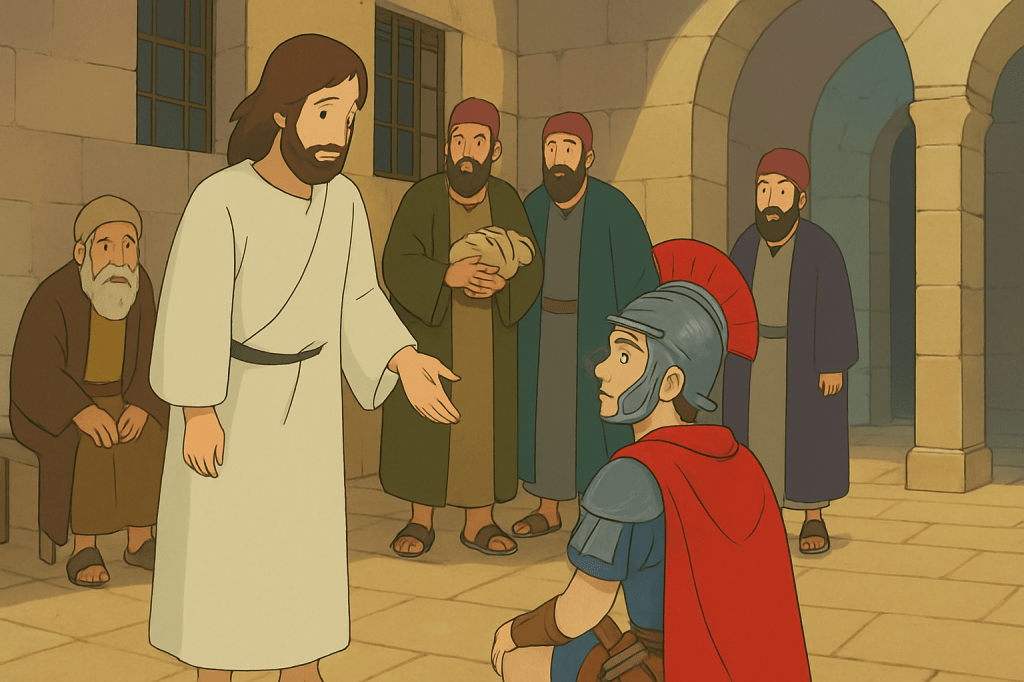
In today’s passage, we meet a Roman centurion—a man of power, prestige, and influence who commanded many soldiers. At this time, Rome ruled Judea with great authority, and Roman soldiers were often viewed as oppressors. Yet something about Jesus captured the centurion’s attention and began to soften his heart.

He observed Jesus closely. He saw compassion in His teaching, authority in His miracles, and a power that was not of this world. What others overlooked, the centurion believed.

When his servant lay paralyzed and suffering, the centurion came forward in faith and appealed to Jesus for healing. Jesus immediately responded, “I will come and heal him.” But the centurion replied, “Lord, I am not worthy to have you come under my roof, but only say the word, and my servant will be healed.” Though he was a man of authority, he recognized that Jesus’ authority was far greater—authority over sickness, over suffering, and over all creation.

With only a few brief encounters, he grasped a truth that even many of Jesus’ own people missed. Jesus marveled at his faith and declared: “Go; let it be done for you as you have believed.” At that very moment, the servant was healed.

• The centurion believed Jesus has authority over sickness.

• The centurion believed Jesus is full of compassion.

• The centurion believed that when you ask, you will receive.

So, where is your belief today? Is it in your position, your family, your resources, or your own strength? Or is it anchored in Jesus—the One who holds true authority and compassion?

Today’s word invites us to come forward like the centurion. Lay aside who you are, and remember who Jesus is. If you place your belief in your own wisdom and power, you will remain lying in suffering. But when you place your belief in Jesus, His Word brings breakthrough, healing, and hope.

As you believe, so shall it be done for you.

Prayer:

Lord, thank You for Your compassion toward us. Please give us faith that brings breakthrough in our lives. In Jesus’ name, we ask. Amen.

Standard
Christ, Hope, Potter , encouragement, Uncategorized

Strech your hand

2025 Aug 17th

Word for Today : Stretch your hand to do good

“Stretch out your hand.” – Luke 6:10

It was the Sabbath—a day when the Jewish people were commanded to refrain from various form of works and to rest and worship. As Jesus was teaching in the synagogue, a man entered with a withered hand.

Medically, a withered hand is a condition where knots form in the tissue under the palm, eventually hardening the muscle and pulling the fingers inward. There is no permanent cure. Spiritually, it represents an inability or restricted to do good works.

The irony is that Jesus chose to heal this man on the Sabbath. It seems the man was brought in intentionally so the leaders could accuse Jesus of breaking the law. But Jesus, knowing their intentions, wasted no time. He called the man to stand before everyone and then commanded, “Stretch out your hand.” Immediately, the curled-up hand opened—fully restored for use.

The leaders watched the healing and became furious, plotting against Jesus—not for doing wrong, but for doing good. This reminds us that some people will accuse or oppose you even when you do the right thing. In our world, few seek approval to help, while many are selective about who receives the honor, even placing human-made laws and restrictions on when, where, and to whom good should be done.

This is the spiritual “withered hand” disease—shrinking our ability and willingness to help. But Jesus demonstrates that compassion has no restrictions. There is no set place, time, or person required to do good—just do good.

Bible also teaches, “So then, as we have opportunity, let us do good to everyone.” – Galatians 6:10

To all who feel their “hand” has withered—whether through fear, criticism, or discouragement—Jesus commands you today: Stretch out your hand. Stretch your horizon. Stretch your ability to do good any time, any where and to anyone.

Prayer:

Dear Father, thank You for the help we have received in every circumstance. Help us, guide us, and lead us to do good to others in all situations. Amen.

Standard