
So the men turned from there and went toward Sodom, but Abraham still stood before the Lord. Then Abraham drew near and said, ‘Will you indeed sweep away the righteous with the wicked?’”
Genesis 18:22–23 ESV
Hudson Taylor, a British missionary (21 May 1832 – 3 June 1905), was known for spreading the gospel in China. Although it was exceptionally difficult to share the gospel during the 19th century because of political opposition, cultural prejudice, and financial hardship, Taylor remained steadfast in his calling.
In spite of losing his wife and several children, he never allowed suffering to quench the fire of God within him. Instead, his trials fueled his passion to bring Christ to the people of China. Over the years, he helped establish nearly 20 mission stations, trained hundreds of missionaries (both foreign and Chinese), and inspired countless others to serve in one of the most challenging mission fields in history.
Taylor was born into a Christian home. Before his birth, his parents had prayed that he would one day serve as a missionary to China. Yet, as a young man, he drifted away from faith and became worldly and skeptical. One day, at age 17, while bored and looking for something to read, he picked up a gospel tract. As he read it, the Holy Spirit convicted his heart, and he surrendered his life to Christ.
Remarkably, that same hour, his mother—seventy miles away visiting relatives—was moved by the Spirit to pray earnestly for her son’s salvation. God heard her intercession. A mother’s prayer, uttered miles away, was answered that very moment.
That encounter ignited a fire in Hudson Taylor’s heart—a fire for souls, especially for the people of China. Just as a spark can set off a chain reaction of flames, the fire that began in his mother’s prayers spread through him and to others who would later carry the gospel.
Even after great personal loss, Taylor’s passion did not fade. His second wife also joined him in the mission field, and several of his children later became missionaries themselves. The fire continued to spread through generations.
What stands out here is the power of intercession. A mother’s prayer led to her son’s salvation, and that same son became an intercessor for millions of lost souls. When we truly encounter God’s mercy and compassion, we cannot contain it—we begin to intercede for others. The love of God compels us to stand in the gap for those who do not yet know Him.
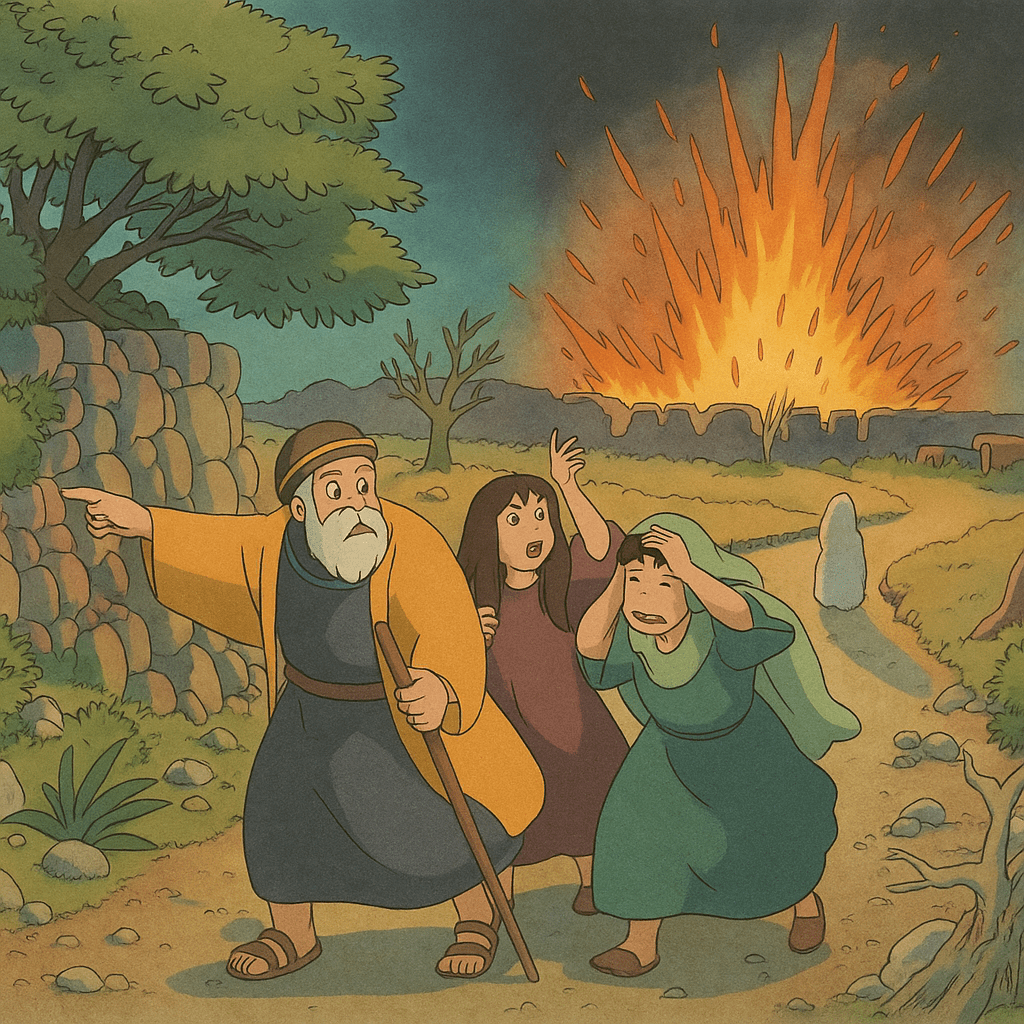
In Genesis 18, when God revealed His plan to destroy Sodom and Gomorrah for their wickedness, Abraham stood before the Lord and he asked if God would spare the city for the sake of 50 righteous people, then 40, then 30, and finally 10. Though the cities were ultimately destroyed because there weren’t even ten righteous people, Abraham’s intercession revealed his heart of compassion and his understanding of God’s mercy.
Abraham had no personal connection to the people of Sodom, yet he interceded for them. That is the heart of a true intercessor—pleading for mercy even for those who do not deserve it.
Standing in the gap for others is not just a noble act; it is the will of God.
We ourselves are often living answers to someone else’s prayer for our salvation.
When we know we’ve received mercy and compassion from God, the fire within us should never die out. Let it spread—to your family, your workplace, hospitals, prisons, homeless shelters, and even war zones. Wherever you pray, God listens. He still honors intercessory prayers.
Do not quench the fire of God within you.
Expand your horizon, and keep burning brightly for Jesus.
Prayer:
Heavenly Father, thank You for the fire of Your love that burns within us.. May our prayers touch lives far beyond what we can see. Keep our hearts aflame with compassion for the lost, and let Your mercy flow through us to the nations. In Jesus’ name, Amen.
 4mthesoul